
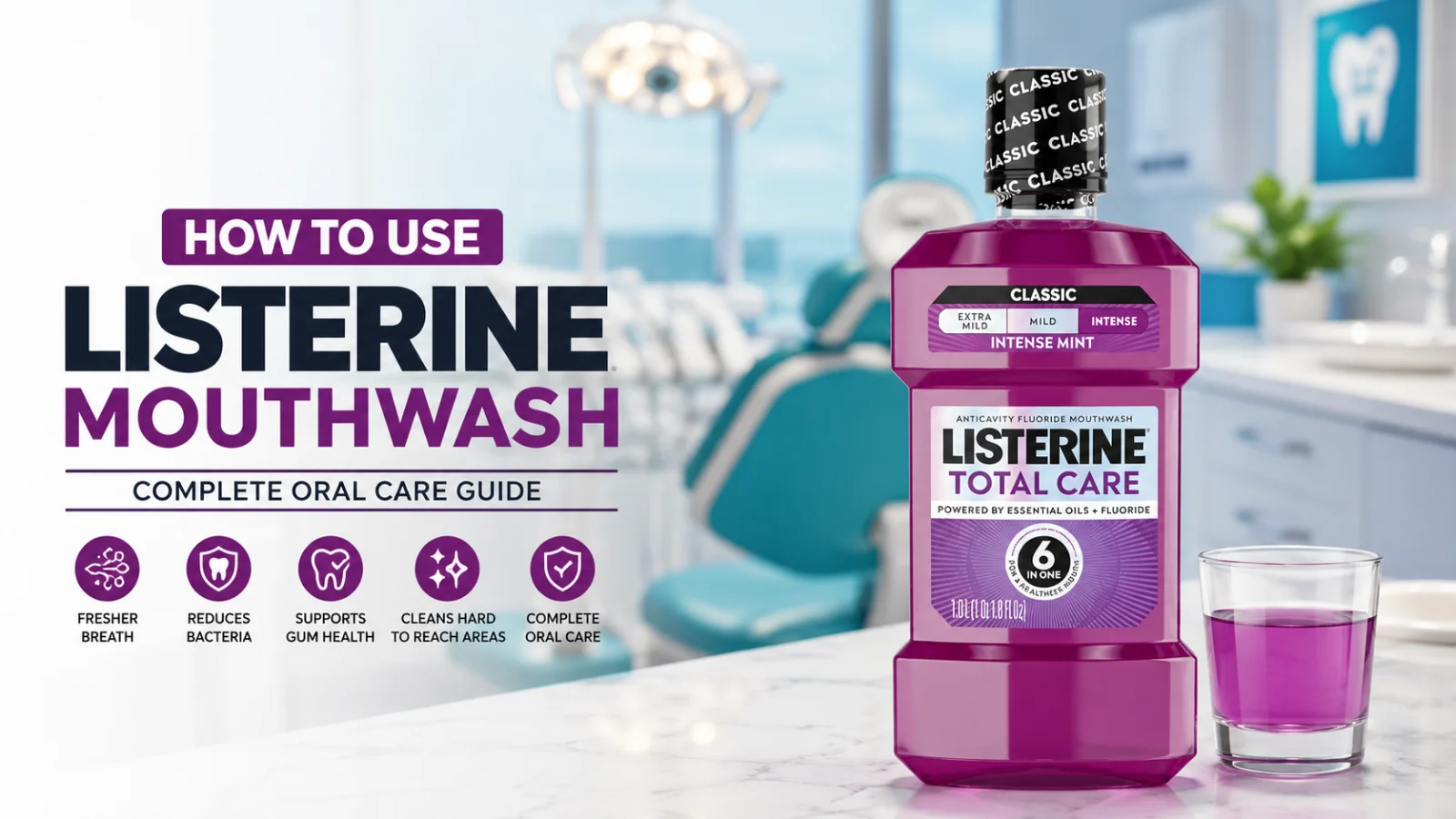

How to use Listerine mouthwash: oral care guide is a common question for people who want better oral hygiene. Many people use mouthwash every day, but they are not sure how to use it the right way.
Mouthwash is an important part of a Complete Oral Care Guide. It works together with brushing and flossing to keep your mouth clean. It can help freshen your breath, reduce bacteria, and leave your mouth feeling fresh.
I used to think brushing alone was enough. But after adding a simple mouthwash step to my routine, my mouth felt fresher for much longer. The key is using it correctly and choosing a product that matches your needs.
A good oral care routine does not need to be complicated. Small habits done consistently can protect your teeth, gums, and overall mouth health. This guide will show you the correct way to use Listerine mouthwash. You will learn its benefits, mistakes to avoid, possible issues, and how to use it every day.
What Is Listerine Mouthwash?
Listerine is a popular mouthwash designed to support daily oral hygiene. It helps clean areas of the mouth that brushing may not reach easily.
Brushing removes dirt and plaque from your teeth. Mouthwash helps reach small areas that a toothbrush may miss.
Listerine mouthwash is commonly used to:
- Freshen breath
- Reduce mouth bacteria
- Support gum health
- Help control plaque buildup.
- Leave a clean feeling after use.
A Complete Oral Care Guide should include more than just brushing. It should also include habits like flossing, cleaning your tongue, and using mouthwash properly.
Different Listerine products have different formulas. Some focus more on gum care, while others focus on fresh breath or cavity protection. Always check the label before use.
Benefits of Using Mouthwash
Adding mouthwash to your routine can make daily oral care easier. It works best when combined with brushing and flossing.
Helps Freshen Breath
Bad breath often comes from bacteria in the mouth. Mouthwash helps reduce those bacteria and leaves a fresher feeling.
However, mouthwash only covers the smell temporarily. Cleaning your tongue and brushing regularly are still important.
Supports Gum Health
Healthy gums are a key part of a Complete Oral Care Guide. Mouthwash may help reduce bacteria around the gum line.
This can support cleaner gums and a healthier mouth environment.
Helps Reach Hard Areas
A toothbrush cannot always reach every small space. Mouthwash can move around the mouth and reach areas that are harder to clean.
Makes Oral Care More Complete
A simple routine with:
- Toothbrush
- Toothpaste
- Floss
- Mouthwash
can create a stronger daily habit.
Pros and Cons of Listerine Mouthwash
Before you add any product to your routine, learn about its good and bad sides first..
Pros
- Helps freshen breath quickly
- Easy to add to daily routines
- Helps reduce mouth bacteria
- Supports gum care
- Comes in different formulas
- Useful after meals
Cons
- Some types may feel too strong.
- Certain formulas may irritate sensitive mouths.
- Overuse may cause dryness.
- It does not replace brushing or flossing.
- Some people dislike the strong taste.
Use mouthwash correctly to get the best results. Do not use more than the recommended amount.
How to use Listerine mouthwash
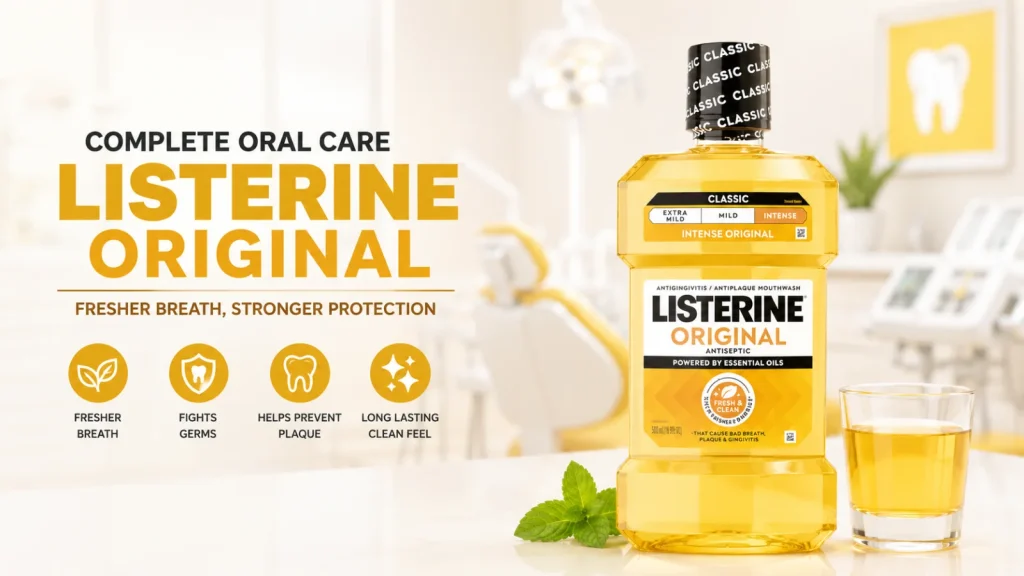
Using Listerine mouthwash correctly helps you get better results from your oral care routine.
Follow these simple steps:
Step 1: Brush Your Teeth First
Start by brushing your teeth using fluoride toothpaste.
Brushing removes food and plaque, allowing mouthwash to work more effectively afterward.
Step 2: Measure the Right Amount
Use the amount recommended on the bottle.
Do not use extra mouthwash, thinking it will clean better. More does not always mean better.
Step 3: Swish Around Your Mouth
Pour the mouthwash into your mouth and swish it around.
Move it around your:
- Teeth
- Gums
- Tongue
- Inner cheeks
Make sure it reaches different areas.
Step 4: Use It for the Recommended Time
Most people use mouthwash for around 30 seconds.
Avoid swallowing it. Spit it out after rinsing.
Step 5: Avoid Eating or Drinking Immediately
Try to wait after using mouthwash so the ingredients can continue working.
This simple habit can become an important part of your Complete Oral Care Guide routine.
Common Mistakes People Make
Many people use mouthwash incorrectly without realizing it. Using Too Much. A larger amount does not clean your mouth better. Follow the bottle instructions.
Replacing Brushing With Mouthwash
Mouthwash supports brushing, but it cannot replace brushing and flossing.
Rinsing With Water Afterward
Some people rinse with water immediately after using mouthwash. This can reduce the effect of some ingredients.
Using It After Strong Foods Only
Mouthwash works best as part of a regular routine, not only after certain meals.
Ignoring Your Tongue
Your tongue can hold bacteria that affect your breath. Cleaning your tongue is an important oral care step.
Best Time to Use Mouthwash
The best time depends on your routine.
Many people prefer:
Morning
Using mouthwash in the morning can help start the day with fresher breath.
Night
Nighttime use is also helpful because bacteria can build up while you sleep.
A simple routine:
Mouthwash Type
Best For
Alcohol-Free Option
Fresh BreathBad breath controlAvailableGum CareGum supportAvailableTotal CareDaily oral routineAvailable
Consistency matters more than the exact time.
Mouthwash vs Brushing
Brushing and mouthwash do different jobs.
Oral Care Method
Main Purpose
Brushing removes plaque from teeth. Flossing cleans between teeth. Mouthwash helps reduce bacteria and freshen breath
A Complete Oral Care Guide should include all three because each step supports the others.
Brushing cleans surfaces, while mouthwash helps reach areas you may miss.
Mouthwash for Sensitive Mouth
Some people feel burning when they use certain mouthwashes.
This may happen because of:
- Strong formulas
- Alcohol content
- Sensitive gums
- Mouth irritation
If your mouth feels uncomfortable:
- Try an alcohol-free option.
- Use less often
- Stop if irritation continues.
A comfortable routine is easier to maintain long-term.
Easy Daily Oral Care Routine
A simple routine can protect your mouth every day.
Morning Routine
- Brush teeth
- Clean tongue
- Use mouthwash
- Drink water
Night Routine
- Brush again
- Floss
- Use mouthwash if needed.
Other helpful habits:
- Replace toothbrush regularly
- Limit sugary snacks
- Drink enough water
- Visit your dentist for checkups.
Small actions create long-term results.
Recommended Oral Care Products
A helpful oral care setup may include:
Toothbrush
Choose a soft toothbrush or an electric toothbrush that feels comfortable.
Fluoride Toothpaste
Fluoride toothpaste helps support strong teeth.
Mouthwash
Choose a mouthwash based on your needs, such as fresh breath or gum care.
Dental Floss
Floss helps clean spaces your toothbrush cannot reach.
Tongue Cleaner
A tongue cleaner can help remove buildup and support fresher breath.
Frequently Asked Questions
1. How often should I use Listerine mouthwash?
Most people use mouthwash once or twice daily, depending on the product instructions. It works best when combined with brushing and flossing. Using it too often may cause dryness or discomfort for some people.
2. Can mouthwash replace brushing?
No, mouthwash cannot replace brushing. Brushing removes plaque from teeth, while mouthwash helps reduce bacteria and freshen breath. Both work better together as part of a complete oral hygiene routine.
3. Why does mouthwash burn sometimes?
Some mouthwashes contain strong ingredients that create a burning feeling. Sensitive gums, dryness, or irritation can also make this feeling stronger. If discomfort continues, try a gentler or alcohol-free formula.
4. Should I use mouthwash before or after brushing?
Most people use mouthwash after brushing because it helps complete the cleaning routine. However, follow the instructions on your specific product label for the best results.
5. Is mouthwash safe every day?
Many people use mouthwash daily without problems. Choose the right formula for your mouth and avoid overusing it. If you notice irritation, dryness, or discomfort, adjust your routine.
A Complete Oral Care Guide is not about using many products. It is about creating simple habits that protect your mouth every day.
Learning how to use Listerine mouthwash properly can make your routine easier and more effective. Use the right amount, swish correctly, and keep brushing and flossing as your foundation.
Healthy teeth and gums come from consistency. Small daily steps can help you maintain a cleaner, fresher, and healthier smile for years.
