
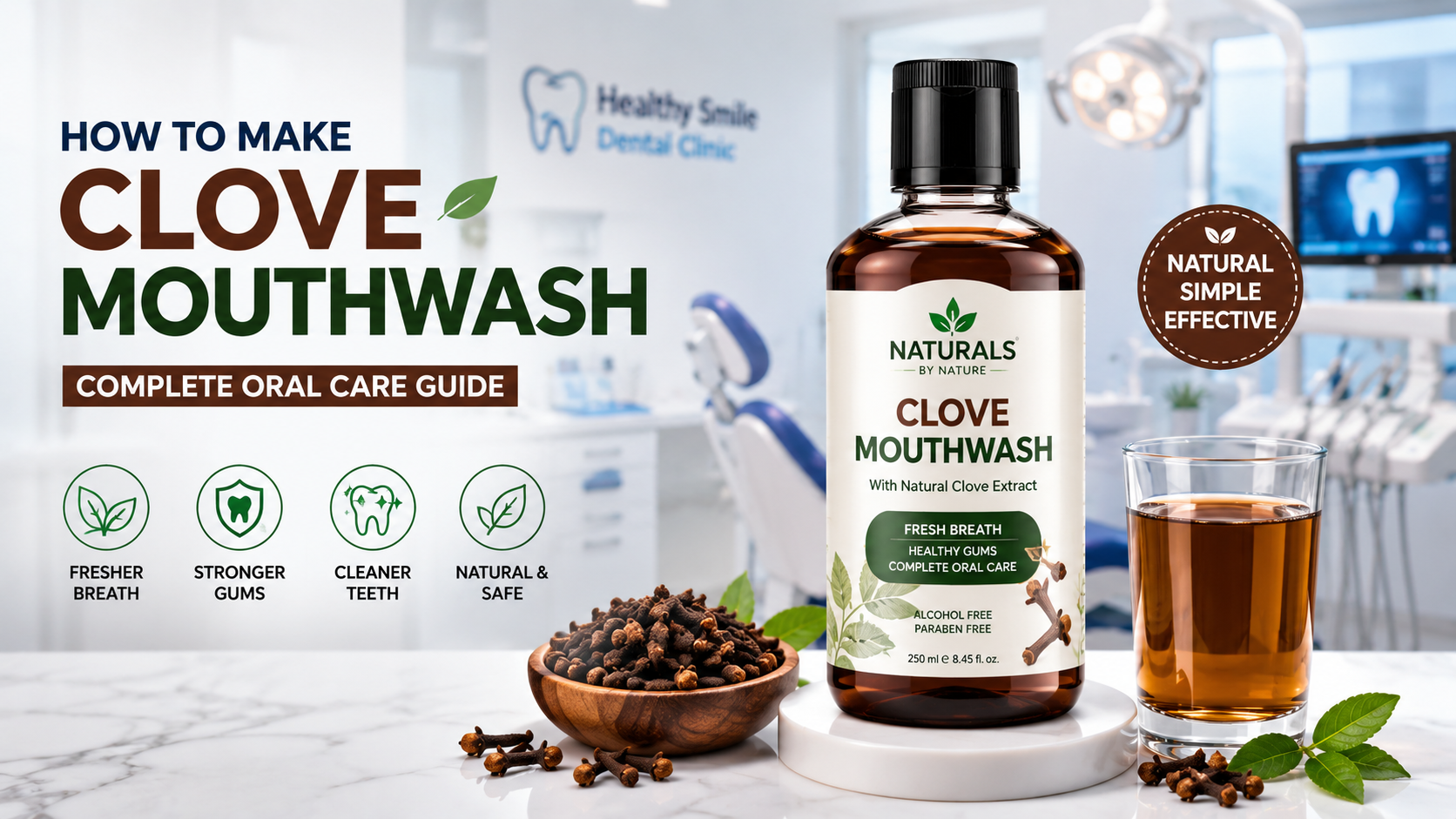

If you want a simple and natural way to support oral care, learning how to make clove mouthwash can be a great option. Many people look for easy home solutions that can help keep their mouths feeling fresh.
A good Complete Oral Care Guide is not only about brushing your teeth. Good oral care means taking simple steps every day. Clean your tongue, drink water, floss your teeth, and use mouthwash. mouthwash. feeling. A homemade clove mouthwash can be an easy addition to your daily routine when used correctly.
This guide explains how to make clove mouthwash, its benefits, possible risks, and safe use. You will also discover how clove mouthwash fits into a simple daily oral care routine.
What Is Clove Mouthwash?
Clove mouthwash is a simple homemade rinse made with cloves and water. Some people also add other gentle ingredients to improve the taste and freshness.
Cloves contain a natural compound called eugenol. Cloves have a strong smell because of this compound, which is often used in oral care.
A homemade clove rinse may help:
- Freshen breath
- Support a clean mouth feeling.
- Reduce unwanted mouth odor.
- Add a natural step to oral hygiene.
However, clove mouthwash should not replace brushing or flossing. It works best as an extra step in a complete routine.
A Complete Oral Care Guide includes different habits that work together. Brushing removes plaque, flossing cleans between teeth, and mouthwash helps refresh the mouth.
Simple daily care can make a big difference over time.
Benefits of Clove Mouthwash
Clove mouthwash can offer several benefits when used properly. It is simple, affordable, and easy to prepare at home.
Helps Freshen Breath
Bad breath often happens because of bacteria and food particles in the mouth.
Clove has a strong natural scent that can help make your breath feel fresher after rinsing.
Good habits also matter:
- Clean your tongue regularly.
- Drink enough water
- Brush twice daily
- Avoid leaving food particles in your mouth.
Supports a Cleaner Mouth
A clove rinse can help remove leftover particles after eating. It may make your mouth feel cleaner and fresher.
It works best when you use it along with:
- Tooth brushing
- Flossing
- Regular dental care
Easy Natural Option
Many people prefer simple ingredients. Clove mouthwash uses basic items that are easy to find.
It can be a useful addition for people who want a gentle oral care habit.
Helps Create a Consistent Routine
The biggest benefit of oral care comes from consistency.
A simple routine is easier to follow than a complicated one.
A Complete Oral Care Guide focuses on small actions that you can repeat every day.
Pros and Cons of Clove Mouthwash
Before adding clove mouthwash to your routine, it helps to understand both the good and bad sides.
Pros
1Natural ingredient
Cloves come from a plant source and have a long history of use.
Easy to make
You only need a few simple ingredients.
Affordable
Homemade rinses can cost less than some store-bought products.
Fresh mouth feeling
The clove aroma can leave your mouth feeling refreshed.
Simple daily habit
It is easy to add after brushing.
Cons
Strong taste
Some people may not like the strong clove flavor.
May irritate sensitive mouths
Using too much clove can feel uncomfortable for some people.
Does not replace dental care
It cannot replace brushing, flossing, or professional dental advice.
Short-term freshness
The fresh feeling may not last all day.
Using clove mouthwash correctly is more important than using it often.
How to prepare clove mouthwash
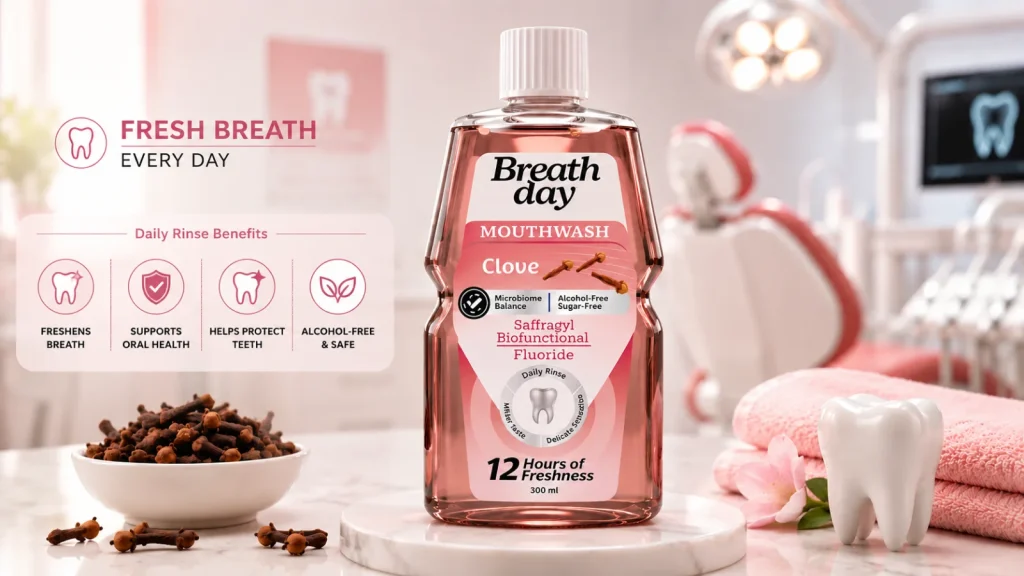
Making clove mouthwash at home is simple. You only need a few ingredients.
Ingredients
You need:
- 1 cup of water
- 4–5 whole cloves
Optional:
- A small amount of peppermint leaves for taste.
Steps
- Boil one cup of water.
- Add the cloves.
- Let them stay in the water for 10–15 minutes.
- Allow the mixture to cool.
- Strain out the cloves.
- Store the liquid in a clean container.
Your homemade clove rinse is ready to use. Use a small amount and avoid swallowing it. For the best results, prepare a fresh batch regularly instead of keeping it for too long.
Step-by-Step Guide to Use Clove Mouthwash
Using clove mouthwash properly helps you get better results.
Step 1: Brush First
Start by brushing your teeth. Brushing removes plaque and food particles. This helps mouthwash work better afterward.
Step 2: Take a Small Amount
Pour a small amount of clove rinse into your mouth. Do not use too much. A stronger rinse does not always mean better results.
Step 3: Swish Gently
Move the liquid around your mouth.
Make sure it reaches:
- Teeth
- Gums
- Tongue
- Inner cheeks
Step 4: Spit It Out
Do not swallow the rinse. Spit it out after about 20–30 seconds.
Step 5: Keep Your Routine Simple
Use it as part of your daily habits. A simple Complete Oral Care Guide routine is easier to maintain for a long time.
Common Mistakes to Avoid
Many people make small mistakes when using homemade mouthwash.
Using Too Much Clove
More cloves do not always mean better results. A strong mixture may feel harsh in your mouth.
Drinking the Mouthwash
Clove rinse is made for rinsing, not drinking. Always spit it out after use.
Skipping Brushing
Mouthwash cannot remove all plaque. Always keep brushing as your main step.
Storing It Too Long
Homemade rinses do not last forever. Make fresh batches regularly and keep them clean.
Best Time to Use Clove Mouthwash
The best time depends on your routine.
Many people prefer:
Morning
Morning use can help start your day with a fresh mouth feeling.
Night
Nighttime use can help remove leftover particles after meals.
A simple routine: Oral Care Method, Main Benefit, Best Time
Clove Mouthwash: Fresh breath support. After brushing, it removes plaque, Morning and night. Flossing: Cleans between teeth daily. The most important thing is consistency.
Clove Mouthwash vs Regular Mouthwash
Both types can support oral hygiene, but they are different. Regular mouthwash has ingredients that help protect your teeth and gums. Clove mouthwash focuses more on a natural rinse experience.
Type
Main Focus: Clove Mouthwash, Natural freshness, Regular Mouthwash, Targeted oral care, Salt Water Rinse. Simple soothing rinse. Choose what works best for your mouth. A good oral care guide includes products that fit your needs.
Complete Oral Care Guide: Daily Routine
A healthy mouth comes from simple habits.
Morning Routine
- Brush your teeth
- Clean your tongue
- Use mouthwash
- Drink water
Night Routine
- Brush again
- Floss
- Use a gentle rinse if needed.
Other helpful habits:
- Replace your toothbrush regularly.
- Reduce sugary snacks
- Visit a dentist for checkups.
Small actions can protect your teeth and gums over time.
Recommended Oral Care Products
A simple oral care setup may include:
Toothbrush
Choose a soft toothbrush that feels comfortable.
Toothpaste
Use toothpaste that supports your daily needs.
Floss
Floss helps clean spaces between teeth.
Mouthwash
Choose a rinse that matches your preference.
Tongue Cleaner
A tongue cleaner can help remove buildup and support fresh breath. These products work together as part of a complete routine.
Safety Tips Before Using Clove Oral Rinse
Natural mouthwash is not suitable for everyone.
Keep these tips in mind:
- Do not use a very strong mixture.
- Avoid swallowing it
- Stop if irritation happens.
- Test a small amount first.
People with sensitive mouths should start slowly.
If you have ongoing mouth problems, ask a dental professional for advice.
Frequently Asked Questions
1. How often can I use herbal mouthwash?
You can use clove mouthwash as an occasional oral rinse. Many people prefer using it once a day after brushing. Avoid using too much clove mouthwash because it may hurt your mouth.
2. Can clove mouthwash replace regular mouthwash?
No, clove mouthwash should not replace all oral care products. It keeps your mouth fresh, but brushing, flossing, and dental care are still needed.
3. Is homemade clove mouthwash safe?
Clove mouthwash can be safe if you make it properly and use a small amount. Avoid making it too strong, and stop using it if you notice irritation or discomfort.
4. Can clove mouthwash help with bad breath?
Clove mouthwash may help freshen breath because of its strong natural aroma. Fresh breath comes from brushing, cleaning your tongue, and good oral care.
5. How long can I store a homemade natural mouth rinse?
It is best to make small amounts and use fresh batches. Store it in a clean container and use it soon. Homemade rinses may lose freshness over time.
A Complete Oral Care Guide is built on simple habits that you follow every day.
Clove mouthwash is easy to make and can support your daily oral care.
Clove mouthwash may support fresh breath and a cleaner mouth feeling. However, it works best when combined with brushing, flossing, and healthy daily habits.
Small steps can create better oral care results over time. Keep your routine simple, stay consistent, and choose habits that work well for you.
