
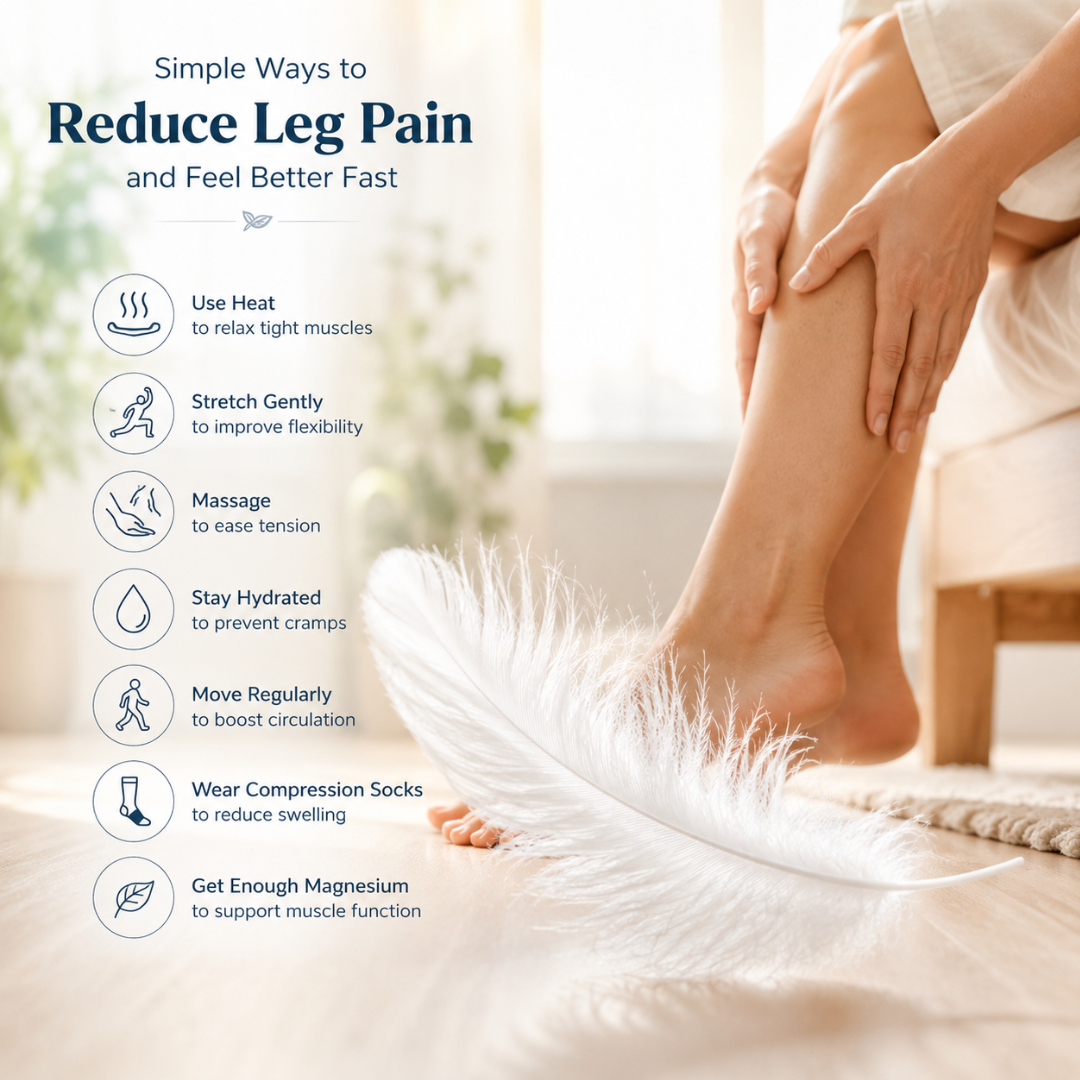

If you’re searching for how to reduce leg pain immediately, here’s the good news: most everyday leg pain responds really well to simple home care. You don’t need fancy treatments or expensive gadgets. Just a few small changes can make a real difference
Leg pain is exhausting. It turns a simple walk to the kitchen into a chore. And if you’ve ever woken up at 2 a.m. with a screaming calf cramp — you know how awful that feels.
Here’s what actually helps.
Why Do Your Legs Hurt?
Before you fix the problem, it helps to understand it.
Leg pain has many causes. Some of the most common ones include:
• Tired or overworked muscles
• Sitting or standing for too long
• Dehydration
• Poor circulation
• Nerve irritation or sciatica
• Low magnesium or potassium
• Tight muscles from bad footwear
The pain can feel different depending on the cause. It might be a dull ache, a sharp cramp, a burning feeling, or heavy, tired legs.
Most mild cases get better at home. But if your pain is severe, keeps coming back, or lasts more than a few weeks — see a doctor.
- Use Heat to Loosen Tight Muscles
Heat is one of the fastest ways to get leg pain relief at home.
It relaxes tight muscles and gets blood moving again. Many people feel better within just a few minutes.
Try one of these:
• Heating pad
• Warm towel
• Hot water bottle
• Warm shower or bath
Leave heat on for about 15 to 20 minutes. A warm Epsom salt bath works especially well after a long shift on your feet.
One thing to watch: don’t go too hot. High heat can irritate your skin. And if your leg is swollen or freshly injured, skip the heat and use a cold pack instead.
- Stretch — Even Just for a Few Minutes
Tight muscles are a major reason legs hurt. Gentle stretching gives those muscles a chance to loosen up.
You don’t need to do yoga or spend 30 minutes on it. Even 5 minutes helps.
Here are four easy ones to try:
Calf stretch — Stand near a wall and stretch one leg back behind you.
Hamstring stretch — Sit on the floor and slowly reach toward your toes.
Quad stretch — Stand and gently pull one foot up toward your backside.
Knee-to-chest stretch — Lie on your back and pull one knee toward your chest.
Go slow. Breathe normally. Don’t push into pain — just a gentle pull is enough.
Afterward, most people say their legs feel lighter and less stiff. It really works.
- Massage the Area
Our muscles sometimes just need some hands-on attention. Massaging a sore leg improves blood flow and helps release tension — and it’s one of the easiest ways for how to reduce leg pain immediately at home. You don’t need to book a spa appointment either. A few minutes of self-massage at home does the job. Use your hands to rub the sore area in slow, gentle circles.
You can also try:
• A foam roller for your calves and thighs
• A massage gun for deeper relief
• Pain relief creams with menthol or arnica
Those creams with a cooling or warming feeling? They can actually take the edge off soreness pretty quickly. Keep one handy.
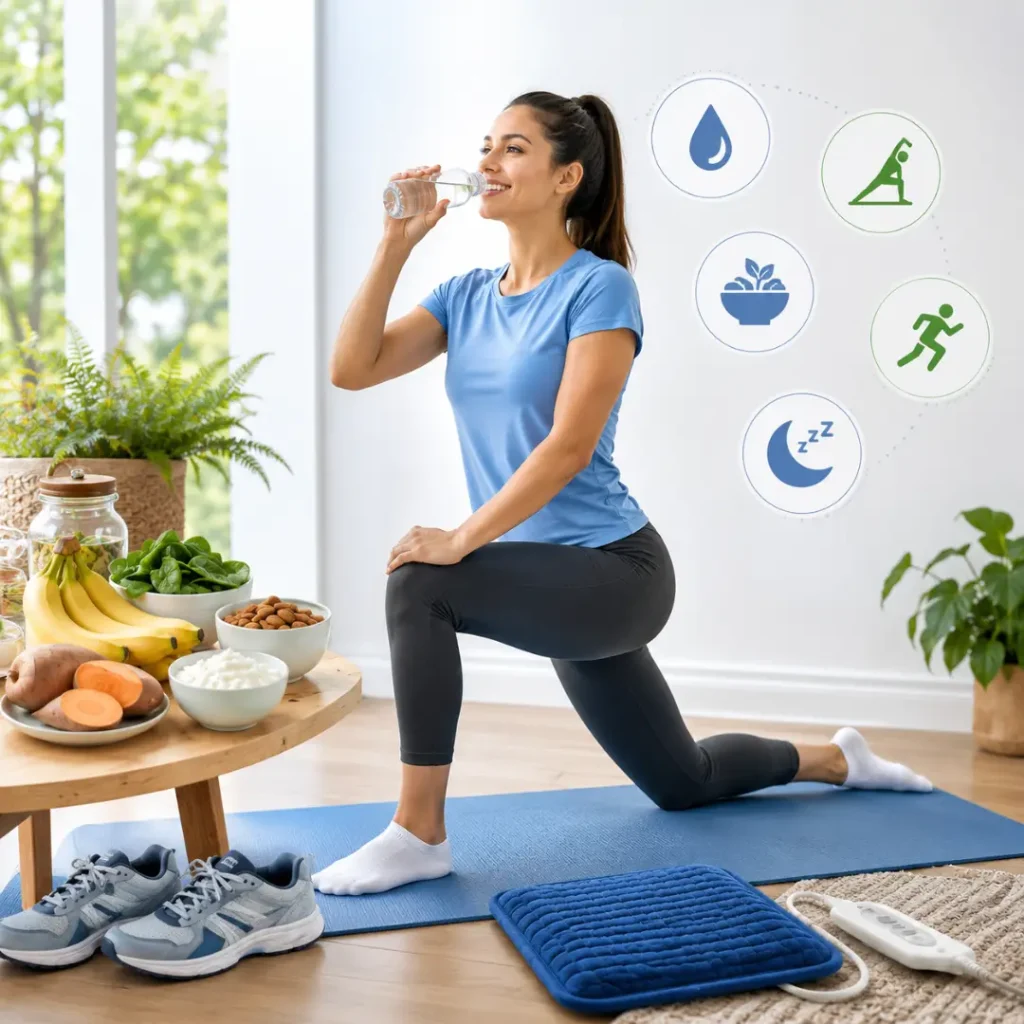
- Drink More Water
This one surprises people — but it’s real.
Dehydration is behind a lot of muscle cramps, especially in the legs. When your body runs low on fluids, muscles start misfiring and cramping up.
It gets worse when you:
• Exercise hard
• Sweat a lot
• Work long shifts on your feet
• Spend time in the heat
Don’t wait until you feel thirsty. Sip water throughout the day. After heavy sweating, an electrolyte drink helps replace what you lost.
It’s a simple habit that can seriously cut down on leg cramps over time.
- Move Around — Don’t Just Sit Still
When your legs hurt, the first instinct is to rest. And rest does help. But sitting or lying in one position for too long? That can actually make things worse.
Light movement keeps your blood flowing and stops muscles from seizing up.
You don’t need to go for a run. Just:
• Walk around the room for 5 minutes
• Stretch your ankles in circles while sitting
• Take a short walk outside
• Get up and move around every hour
Even small amounts of movement make your legs feel less stiff and heavy.
- Try Compression Socks
If your legs feel tired, achy, or swollen by the end of the day — compression socks are worth trying.
They gently squeeze the legs to push blood upward and reduce swelling. Lots of people use them for:
• Long work shifts
• Travel and flights
• Pregnancy
• Recovery after exercise
Many users say their legs feel noticeably less heavy by the end of the day when wearing them.
Just make sure you get the right size — too tight and they’re uncomfortable, too loose and they won’t help.
- Check Your Magnesium
Low magnesium is one of the most overlooked causes of recurring leg cramps.
Magnesium helps your muscles relax and your nerves work properly. Without enough of it, cramps are more likely — especially at night.
Good food sources include:
• Spinach and leafy greens
• Almonds and pumpkin seeds
• Bananas and avocados
Some people also take magnesium supplements, especially for nighttime leg cramps. Magnesium glycinate is a popular choice because it’s gentler on the stomach.
Talk to your doctor before starting supplements, though. It’s always good to check first.
Other Products That Can Help
You don’t need a whole cabinet full of stuff. But a few simple tools can make managing leg pain easier day to day.
Pain relief creams — Quick, easy, and portable. Good for soreness and minor aches.
Foam rollers — Great for loosening tight calves and thighs. A little uncomfortable at first, but most people get used to it fast.
TENS units — These send tiny electrical pulses through the skin to block pain signals. Useful for sciatica, nerve pain, or stubborn muscle aches.
Leg massagers — Electric devices that use pressure or vibration to relax your legs. Really nice after a long day on your feet.
Daily Habits That Prevent Leg Pain
Getting fast relief is great. But stopping the pain from coming back in the first place is better. If you’re already relying on quick fixes for how to reduce leg pain immediately, pairing that with a few daily habits will help even more. These habits don’t take much effort — but they add up:
• Drink water throughout the day
• Wear shoes that actually support your feet
• Stretch a few times a week
• Take short movement breaks if you sit or stand for long hours
• Eat a balanced diet with enough minerals
• Get good sleep — muscles recover overnight
Your legs work hard every day. A little consistent care goes a long way.
When to See a Doctor
Home remedies are great for everyday leg pain. But some signs need professional attention.
Call your doctor if you notice:
• Sudden or severe leg pain
• One leg that becomes red, warm, or very swollen
• Numbness or weakness in the leg
• Pain after an injury
• Trouble walking
• Symptoms that don’t improve after a few weeks
These could point to something that needs medical treatment — better to catch it early.
Final Thoughts
If you’re looking for how to reduce leg pain immediately, start with the basics. Heat, stretching, hydration, light movement, and massage are your best starting points.
You don’t need to do everything at once. Try one or two things and see what helps your body most.
Over time, small habits — drinking more water, stretching regularly, wearing better shoes — will help prevent pain from building up in the first place.
Your legs carry you everywhere. They deserve a little attent
