
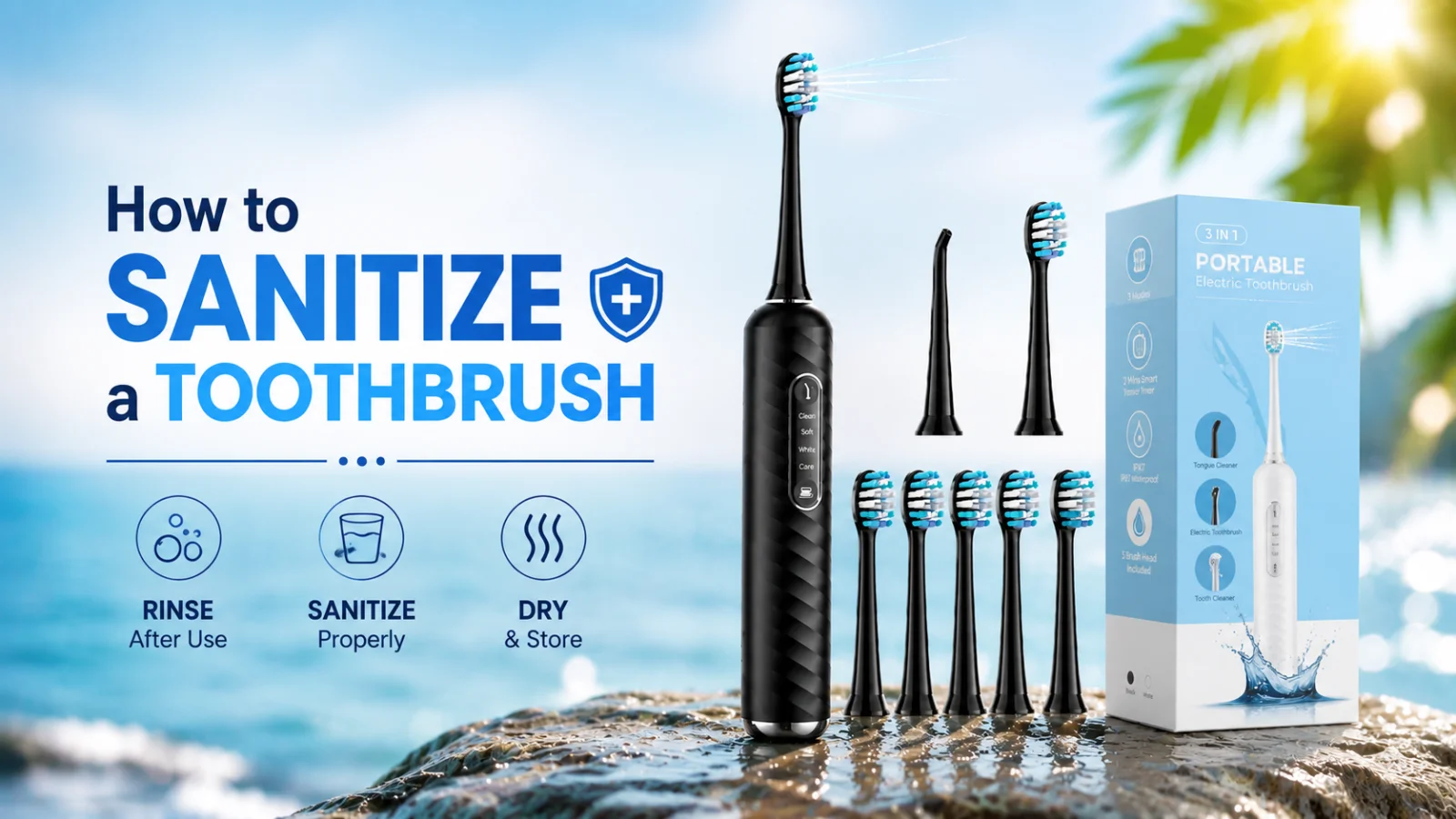

How to sanitize a toothbrush helps you keep your daily oral care routine clean and simple. Many people brush their teeth every day, but they forget that their toothbrush also needs proper care.
A toothbrush helps remove leftover food and buildup from teeth. However, after brushing, small particles and moisture can stay on the brush. That is why keeping your toothbrush clean and storing it properly can become an important part of your routine.
A clean toothbrush supports better brushing habits. It also helps you feel more comfortable every time you start your oral care routine.
A Complete Oral Care Guide is not only about brushing your teeth and using toothpaste. It also includes simple habits like caring for your toothbrush, keeping it clean, and storing it the right way.
In this article, you will learn easy toothbrush care tips, simple cleaning steps, common mistakes, and how to keep your toothbrush fresh.
How to sanitize a toothbrush
Learning how to sanitize a toothbrush correctly does not have to be difficult. A few simple steps can help you maintain better toothbrush hygiene every day.
Your toothbrush needs care because it comes in contact with your mouth daily. After brushing, rinsing, and storing it correctly can help keep it cleaner.
Follow these simple steps:
Step 1: Wash your hands
Before touching your toothbrush, wash your hands properly. Clean hands help you handle your toothbrush in a more hygienic way.
Step 2: Rinse the toothbrush after brushing
After brushing, rinse your toothbrush under clean running water. This helps remove leftover toothpaste and particles from the bristles.
Make sure you remove any visible residue before storing it.
Step 3: Shake off extra water
After rinsing, gently shake your toothbrush. Removing extra water helps the brush dry faster.
A wet toothbrush can stay moist for longer, so proper drying is an important part of toothbrush care.
Step 4: Store it correctly
Keep your toothbrush in an open and clean place. Letting air reach the bristles helps keep the brush fresh.
Avoid putting a wet toothbrush inside a closed container because moisture can remain trapped.
Step 5: Replace it when needed
A toothbrush does not last forever. Over time, bristles can become worn and less effective.
Replace your toothbrush when:
- Bristles look damaged
- The brush feels old
- The bristles lose their shape.
- Cleaning feels less comfortable.
Simple daily habits can make toothbrush care easier.
Why Should You Sanitize Your Toothbrush?
Your toothbrush plays a big role in your daily oral hygiene routine. Since it cleans your mouth every day, keeping it clean is an important habit.
Many people focus on brushing technique but forget about toothbrush storage and care. A clean toothbrush can make your daily routine feel more comfortable.
Good toothbrush habits include:
- Rinsing after every use
- Keeping it dry
- Storing it properly
- Avoiding sharing toothbrushes
- Replacing it regularly
A toothbrush should have its own clean space. Keeping it away from dirty surfaces helps maintain better hygiene habits.
Toothbrush care is a small step, but it fits naturally into a Complete Oral Care Guide. Healthy mouth habits are built from simple actions repeated every day.
Complete Oral Care Guide: Understanding Toothbrush Hygiene
Toothbrush hygiene means taking care of the tool you use to clean your teeth. It is an important part of a complete daily routine.
After brushing, your toothbrush may have:
- Toothpaste leftover
- Water moisture
- Food particles
- General buildup
That is why regular cleaning and proper storage matter.
A good toothbrush care guide includes simple steps:
- Rinse the brush after use.
- Allow it to dry naturally.
- Keep it in a clean place.
- Replace it when necessary.
Toothbrush hygiene does not need complicated methods. Simple habits often work best because they are easy to follow.
Method
Purpose
Best For
Rinsing with water removes leftover toothpaste. Daily cleaning and air drying keep the brush fresh. Regular storage, replacing the brush, maintains brush quality. Long-term hygiene
Your toothbrush is part of your oral care routine. Taking care of it helps you build better daily habits.
How to Clean a Toothbrush After Brushing
Cleaning your toothbrush after brushing is one of the easiest ways to improve your toothbrush care routine.
Many people finish brushing and immediately put their toothbrush away. However, giving your brush a few extra seconds of care can make your routine better.
Follow these simple steps:
Rinse properly
Use clean water to rinse away toothpaste and leftover particles. Move your fingers gently through the bristles if needed.
Remove extra toothpaste
Check the brush head and remove any remaining toothpaste. This keeps the bristles cleaner.
Let it dry
Place your toothbrush upright so air can reach the bristles. Dry storage is an important part of toothbrush hygiene.
Keep it away from dirty areas.
Do not place your toothbrush directly on sinks or other surfaces that may not be clean.
Daily toothbrush care tips:
- Keep the toothbrush away from dirty surfaces.
- Do not share toothbrushes.
- Let the brush dry naturally.
- Keep the storage area clean.
- Handle it with clean hands.
These easy steps can become part of your normal oral hygiene routine.
Complete Oral Care Guide: Best Toothbrush Storage Habits
Proper toothbrush storage is often overlooked. However, where you keep your toothbrush can affect how clean it stays.
A toothbrush should be stored in a place where it can dry naturally. Keeping it covered while wet may prevent proper drying.
Good storage habits include:
- Keep the toothbrush standing upright.
- Allow air around the bristles.
- Store it away from dirty areas.
- Keep each toothbrush separate.
Avoid storing multiple toothbrushes pressed together. Giving each brush its own space is a simple way to improve hygiene. Your Complete Oral Care Guide should include every small habit that supports better oral care. Toothbrush storage is one of those small but useful habits. When your toothbrush is clean and ready, following the ” How to Sanitize Toothbrush habits becomes easier and helps maintain a better brushing routine.
Pros and Cons of Sanitizing Your Toothbrush
Keeping your toothbrush clean is helpful, but it is also important to know its benefits and limits. A balanced view helps you create a realistic toothbrush care routine.
Sanitizing your toothbrush is a simple habit that can fit into your everyday oral hygiene routine. However, it should be done in a practical way.
Pros of toothbrush sanitizing:
Helps maintain toothbrush cleanliness: Regular cleaning helps remove leftover toothpaste and particles after brushing. This keeps your toothbrush feeling fresh.
Supports better hygiene habits: Taking care of your toothbrush encourages you to pay more attention to your overall oral care routine.
Easy to add to daily habits: Rinsing your toothbrush after brushing takes only a few moments. It is a simple step that most people can follow.
Keeps brushing tools fresh: A clean toothbrush can make your brushing experience more comfortable.
Encourages better oral care habits: Small actions like toothbrush care can help you build a more complete routine.
Cons of toothbrush sanitizing:
Requires regular attention: Toothbrush care needs consistency. Forgetting these steps may reduce the benefits.
Some methods can be inconvenient: Certain cleaning methods may take extra time and effort.
Wrong cleaning habits may affect brush quality: Using harsh methods or handling the brush incorrectly may damage the bristles.
Does not replace brushing properly: A clean toothbrush is important, but brushing technique and daily habits still matter.
Supports toothbrush hygiene. Needs regular care. Easy daily habit. Takes extra time. Keeps brush fresh. Wrong methods may affect the brush. Improves routine. Does not replace oral care
The goal is not to make toothbrush care complicated. The goal is to create simple habits that you can follow every day.
Complete Oral Care Guide: When Should You Replace Your Toothbrush?
Replacing your toothbrush at the right time is an important part of toothbrush hygiene. Even if you clean your toothbrush regularly, the bristles will naturally wear down over time.
A toothbrush with damaged bristles may not feel the same during brushing. That is why checking your toothbrush condition regularly is a good habit.
Signs you may need a new toothbrush:
- Bristles look bent or damaged.
- Brush feels worn out.
- Bristles lose their shape.
- Brushing feels less comfortable.
- The toothbrush looks old.
Your toothbrush works best when the bristles stay in good condition.
A Complete Oral Care Guide includes not only cleaning your toothbrush but also knowing when to replace it.
Many people focus only on toothpaste and brushing. However, the tools you use also play a role in your daily routine.
Keeping a fresh toothbrush can help you maintain better brushing habits.
Common Toothbrush Sanitizing Mistakes
Many people have good oral care intentions, but make small mistakes with toothbrush care. Understanding these mistakes can help you improve your routine.
Not rinsing after brushing.
Some people put their toothbrush away immediately after use. Rinsing helps remove leftover toothpaste and particles.
Storing a wet toothbrush
A wet toothbrush may stay damp for a long time. Proper drying is an important part of toothbrush hygiene.
Sharing toothbrushes
A toothbrush is a personal oral care item. Sharing can create poor hygiene habits.
Keeping it in a dirty place
Where you store your toothbrush matters. Keep it away from areas where it can become dirty.
Forgetting replacement
Even a well-cared-for toothbrush needs replacement after regular use.
Avoiding these mistakes does not require a lot of effort. Simple awareness can improve your toothbrush care routine.
Healthy habits are built through small daily actions.
How to Disinfect a Toothbrush: Simple Care Tips
Many people search for how to disinfect a toothbrush because they want extra cleanliness. The first step is understanding that daily care matters most.
A toothbrush does not need complicated treatment every day. Regular rinsing, drying, and proper storage are basic steps that support toothbrush hygiene.
Simple care tips include:
- Wash your hands before handling
- Rinse after brushing
- Keep the brush dry
- Avoid touching bristles unnecessarily.
- Store properly
If you use any additional cleaning method, always follow safe instructions and avoid using methods that may damage the brush.
Your goal should be to maintain a clean brushing tool while keeping your routine simple.
A good toothbrush care guide focuses on habits that are realistic and easy to continue.
Complete Oral Care Guide: Building Healthy Mouth Habits
A healthy mouth routine is made up of many small habits. Toothbrush care is only one part of a complete oral hygiene routine.
Other important habits include: Brush twice daily. Regular brushing helps remove daily buildup and keeps your mouth feeling fresh.
Clean your tongue: Your tongue can collect leftover particles. Cleaning it can help you feel cleaner.
Drink enough water: Water helps keep your mouth refreshed during the day.
Maintain flossing habits: Flossing helps clean areas that brushing may not reach easily.
Keep your toothbrush clean: Your toothbrush is part of your daily routine, so caring for it matters.
A Complete Oral Care Guide connects all these habits together. When simple steps become part of your lifestyle, they are easier to maintain. You do not need a complicated routine. A simple routine followed every day can make a big difference.
How to Keep a Toothbrush Fresh Every Day
Keeping your toothbrush fresh starts with simple actions.
After brushing:
- Rinse the bristles well.
- Remove leftover toothpaste.
- Shake off extra water.
- Place it upright.
- Allow it to air dry.
Avoid covering the toothbrush while it is still wet. Moisture can stay trapped and make drying harder.
Also remember:
- Do not keep multiple toothbrushes touching.
- Do not place your toothbrush on unclean surfaces.
- Do not forget regular replacement.
These small habits create better toothbrush hygiene. A clean toothbrush makes your daily brushing routine feel more comfortable and organized.
Frequently Asked Questions
Q: How to sanitize a toothbrush properly?
To sanitize your toothbrush, rinse it well after brushing, remove leftover toothpaste, allow it to dry, and store it properly. Regular care is an important part of toothbrush hygiene.
Q: How often should I clean my toothbrush?
You should rinse your toothbrush after every use. Daily cleaning and proper storage help keep it fresh.
Q: Can I use household products to sanitize my toothbrush?
It is better to follow safe product instructions and avoid using anything that may damage your toothbrush. Simple cleaning habits are often the easiest option.
Q: Where should I store my toothbrush?
Keep your toothbrush upright in a clean, open area where air can reach the bristles.
Q: How long should I use one toothbrush?
Replace your toothbrush when the bristles become worn, damaged, or uncomfortable to use.
Q: Why is toothbrush hygiene important?
Your toothbrush is part of your daily oral hygiene routine. Keeping it clean helps you maintain better habits.
Q: Can a clean toothbrush improve my oral care routine?
Yes, toothbrush care supports a complete routine. Brushing, cleaning, and proper storage work together.
Learning how to sanitize a toothbrush is a simple but valuable habit for anyone who wants a better oral care routine. Your toothbrush helps clean your mouth every day, so giving it proper care makes sense. The process does not need to be complicated. Rinse your toothbrush, let it dry, store it properly, and replace it when needed.
Small habits create long-term results. A clean toothbrush, regular brushing, and healthy mouth habits all work together. A Complete Oral Care Guide is about creating simple steps that fit your daily life. When you follow a consistent routine, your oral care becomes easier and more comfortable. Taking care of your toothbrush is one small step toward better everyday hygiene.
