
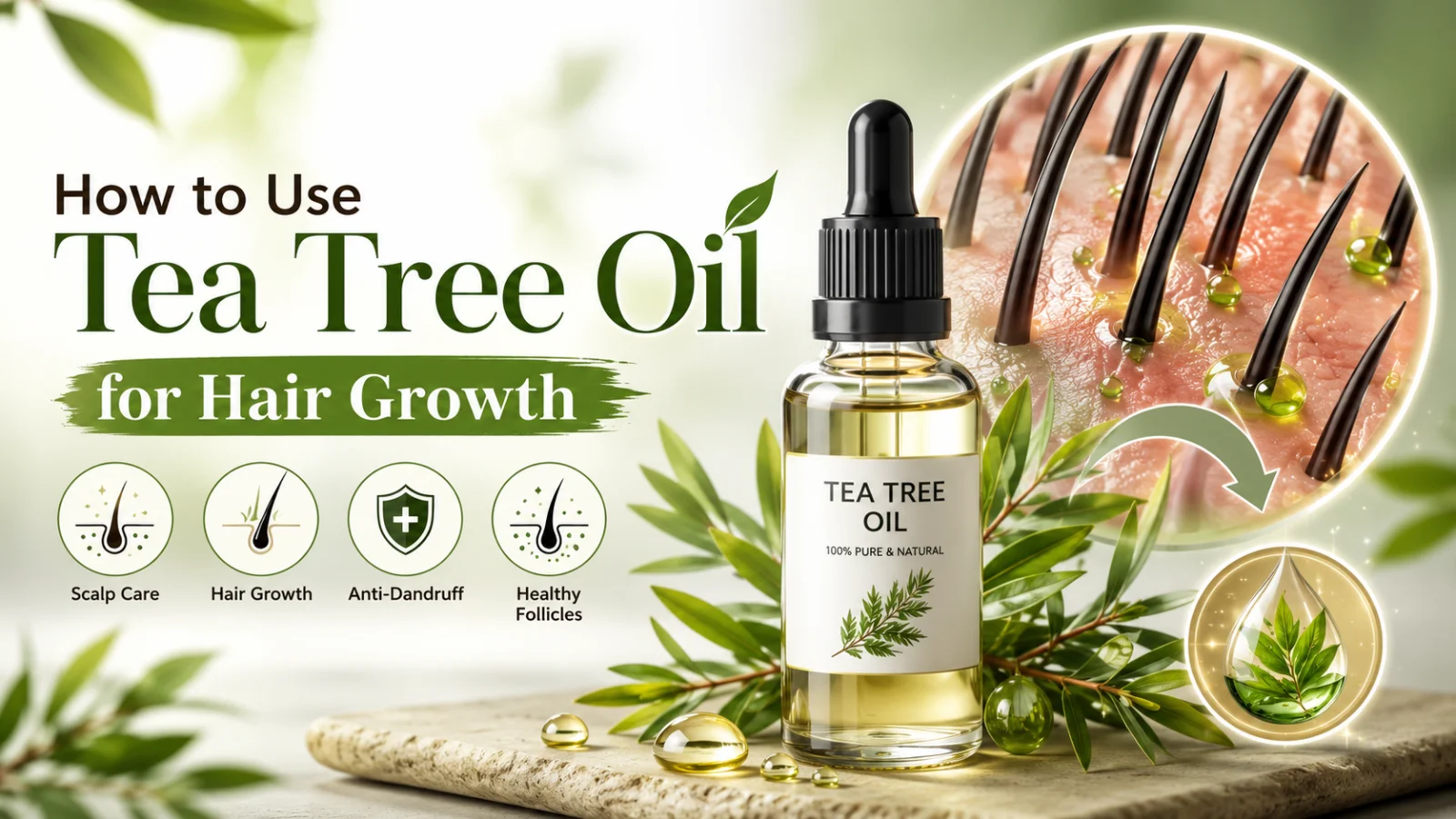

How to use Tea Tree Oil for Hair. One week, everything feels fine. Next, your scalp is itchy, your hair looks thinner, and your shower drain is basically sending you a distress signal. I’ve been there — and trust me, I tried a lot of things before I finally gave tea tree oil a real shot.
A few drops mixed into a carrier oil, massaged into my scalp a few times a week, for about two months. The itching faded. The flaking stopped. My scalp felt healthier than it had in a long time, and new growth started showing up where I least expected it.
So here’s everything you need to know about how to use tea tree oil for hair growth — from why it works to exactly how to apply it.
Why Tea Tree Oil Is Good for Hair
Tea tree oil is extracted from the leaves of Melaleuca alternifolia, a plant native to Australia.
It’s naturally antifungal, antimicrobial, and anti-inflammatory — three properties that are incredibly useful for scalp health. When your scalp is congested with buildup, inflamed, or fighting off dandruff-causing fungus, your hair follicles simply can’t function the way they should.
Tea tree oil clears all of that up. It removes the obstacles standing between your scalp and healthy hair growth.
Simple science. Real results.
Pros and Cons of Tea Tree Oil for Hair
Before you dive in, it’s worth knowing both sides honestly.
Pros
- Fights dandruff and scalp fungus naturally
- Unclogs blocked hair follicles
- Soothes itching and scalp inflammation
- Improves blood circulation when massaged in
- Works for all hair types — straight, curly, fine, thick
- Affordable and available almost everywhere
Cons
- Must always be diluted — applying it undiluted will burn the skin
- Strong medicinal scent that takes some getting used to
- Results require consistent use over weeks, not days
- It won’t fix hair loss caused by hormones or genetics on its own
- Can irritate sensitive skin — a patch test is essential before use
This is the most important section. Follow these steps carefully, and you’ll get the best results.
Step 1: Always Dilute First
Tea tree oil is highly concentrated. Applying it straight to your scalp without diluting it first can cause redness, burning, and irritation. This is non-negotiable.
Safe starting ratio: 3 to 5 drops of tea tree oil per 1 tablespoon of carrier oil.
Step 2: Choose the Right Carrier Oil
Pick based on your hair and scalp type:
- Jojoba oil — lightweight and fast-absorbing, perfect for oily scalps
- Coconut oil — deeply nourishing, best for dry or damaged hair
- Castor oil — thick and powerful; mix it with jojoba if it feels too heavy on its own
- Sweet almond oil — gentle and soothing, ideal for sensitive scalps
Personally, I always reach for jojoba oil. It’s light, non-greasy, and absorbs without any fuss.
Step 3: Do a Patch Test
Apply a small amount of the diluted blend to your inner wrist. Wait 24 hours. If there’s no redness or irritation, you’re good to go.
Skipping this step is how people end up with unexpected reactions. It takes one minute — don’t skip it.
Step 4: Apply Directly to the Scalp
Part your hair into sections to fully expose the scalp. Using your fingertips, apply the oil blend directly onto the scalp — not the hair strands. That’s where your follicles are, and that’s where the oil needs to work.
Pay extra attention to areas that feel the most congested, itchy, or thin.
Step 5: Massage for 5 to 8 Minutes
Use slow, circular motions with light-to-firm pressure across the entire scalp.
This step does more than feel good — it actively increases blood flow to your follicles and helps the oil absorb properly. Think of it as a circulation workout for your scalp.
Step 6: Leave On, Then Rinse Thoroughly
- Quick treatment: Leave the oil on for 20 to 30 minutes, then wash out with a sulfate-free shampoo.
- Overnight treatment: Apply a lighter amount, cover your hair with a silk cap, and wash it out in the morning for deeper penetration.
Always rinse completely. Leaving tea tree oil on the scalp for too long can cause dryness rather than help it.
Easier Ways to Add Tea Tree Oil to Your Routine
Not ready for a full scalp treatment? These methods are simpler and still genuinely effective:
Add to shampoo: Drop 5 drops into your regular shampoo bottle and shake well. Use it every wash — no extra steps, no extra time.
DIY scalp spray: Mix 5 drops of tea tree oil, half a cup of water, and one teaspoon of aloe vera gel in a small spray bottle. Spritz directly onto the scalp between washes for a quick, refreshing boost.
Mix into conditioner: Add 3 drops to your conditioner, massage it into the scalp, leave it on for two minutes, then rinse out.
How Often Should You Use Tea Tree Oil
- Scalp treatment: 2 to 3 times per week
- Mixed into shampoo: Every wash is perfectly fine
- Overnight treatment: Once a week is enough
Stick to this schedule. Overusing tea tree oil can actually dry out the scalp, which is the opposite of what you want.
Realistic timeline: Reduced itching and flaking typically show up within 2 to 4 weeks. For visible hair growth, give it a consistent 2 to 3 months before judging the results.
1. Handcrafted Blends 100% Pure Tea Tree Essential Oil Pure, therapeutic-grade, and free from fillers or additives. Perfect for DIY blends and excellent value for money. (Affiliate link)
2. Paul Mitchell Tea Tree Special Shampoo already contains tea tree oil — just shampoo and go. A long-time fan-favorite that leaves the scalp feeling genuinely clean and refreshed. (Affiliate link)
3. Majestic Pure Tea Tree Essential Oil: Affordable and pure. Works beautifully when combined with rosemary oil for a double hair growth-boosting blend. (Affiliate link)
Frequently Asked Questions
Q1: Can tea tree oil actually regrow hair? Tea tree oil doesn’t directly cause hair regrowth, but it creates the ideal scalp conditions for growth — by unclogging blocked follicles, reducing inflammation, and improving blood circulation. Think of it as clearing the path so your hair can grow more freely.
Q2: Can I mix tea tree oil with rosemary oil? Absolutely — it’s one of the best combinations you can make. Rosemary oil actively stimulates hair follicles and may help block DHT, while tea tree oil cleanses and soothes the scalp. Use 2 drops of each per tablespoon of carrier oil for a powerful blend.
Q3: Is tea tree oil safe for color-treated hair? Yes, as long as you apply it to the scalp only and keep it away from the hair strands. Properly diluted, it won’t affect your color at all.
Q4: What should I do if my scalp gets irritated? Rinse immediately with cool water. In your next blend, reduce the number of drops of tea tree oil and increase the carrier oil. If irritation keeps happening, stop using it and consult a dermatologist.
Q5: What’s the difference between tea tree oil and rosemary oil for hair growth? They work in different but complementary ways. Tea tree oil clears and soothes the scalp — it removes the obstacles to growth. Rosemary oil actively stimulates follicles and may block DHT. Together, they’re far more effective than either one used alone.
Now you know exactly how to use tea tree oil for hair growth — and what separates people who see results from those who don’t comes down to three things: the right method, the right consistency, and enough patience to see it through.
Dilute it. Apply it to the scalp. Massage it in. Repeat two to three times a week. That really is the whole formula.
Your scalp will start feeling better long before your hair visibly changes. Trust the process and stay consistent — the results will follow.
Tried tea tree oil for your hair? I’d love to hear how it went — drop your experience in the comments below!
