

Introduction
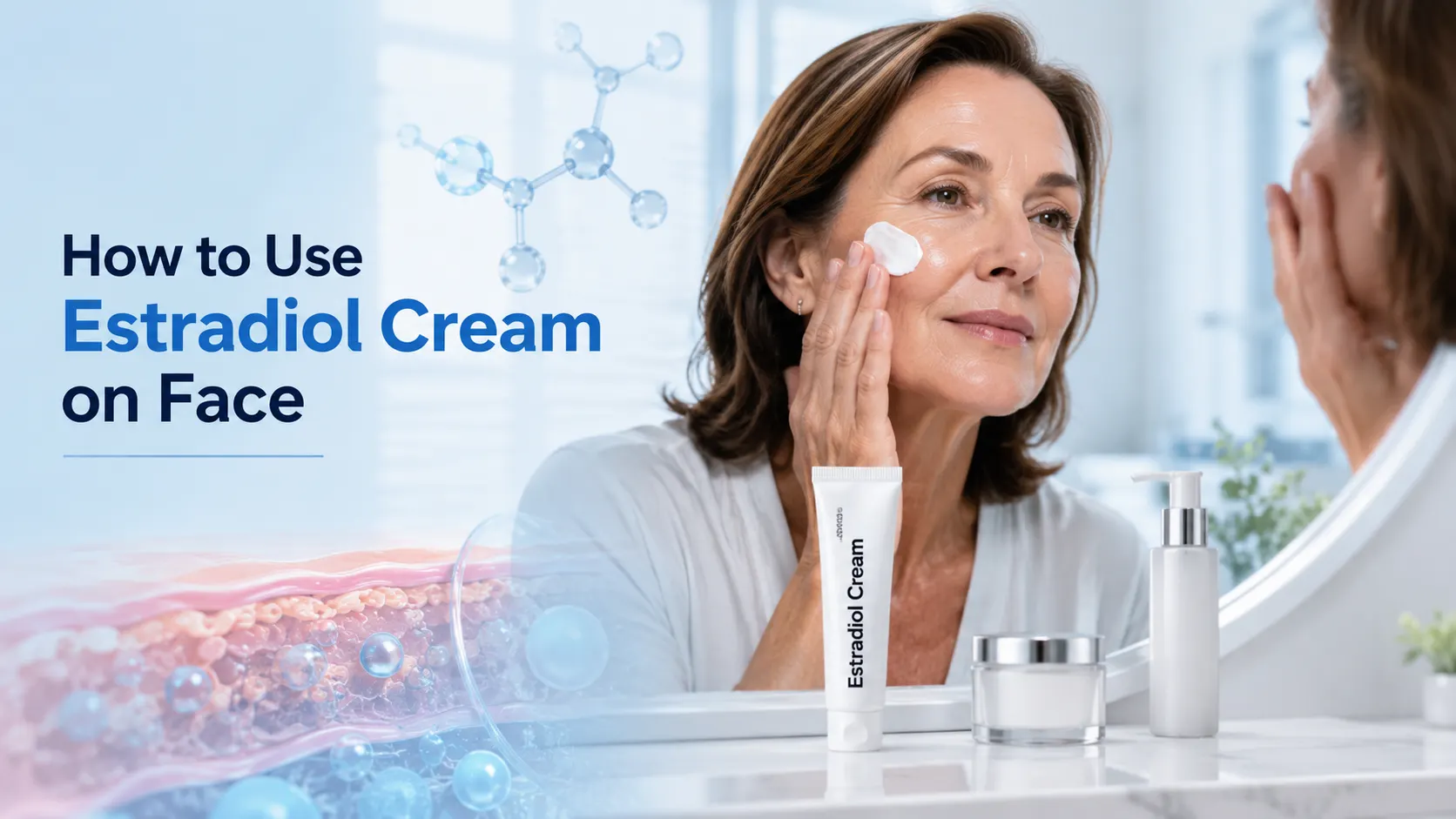
How to Use Estradiol Cream on Face is an important topic for people interested in skin health. Healthy, youthful skin depends on several factors. Good nutrition helps keep your skin healthy. Stay hydrated every day. Protect your skin from the sun and follow a consistent skincare routine. Hormone balance and genetics matter too. Estrogen is one of the key hormones that helps keep your skin healthy. Estrogen helps keep your skin healthy. It keeps the skin hydrated and smooth. It also supports collagen and protects the skin barrier.
As women age, especially during and after menopause, estrogen levels decline. This hormonal change can make the skin thinner and drier. It can also cause fine lines, wrinkles, and reduced elasticity. Because of these changes, many people look for ways to keep their skin looking younger. One treatment that has gained attention is estradiol cream.
Estradiol cream is a prescription medicine. Doctors prescribe estradiol cream to treat symptoms caused by low estrogen. These symptoms include vaginal dryness and menopausal discomfort. Some healthcare providers prescribe it off-label for postmenopausal women. They may use it to help improve skin quality. However, it is not an over-the-counter cosmetic cream. Never use it on your face without medical advice.
This guide explains how estradiol cream works. It covers its potential benefits and risks. You will also learn who may enjoy it, how to apply it for safe use, and what precautions to take.
What Is Estradiol Cream?

Estradiol cream is a topical prescription medication. It contains estradiol, the main form of estrogen. Before menopause, the ovaries produce most of the body’s estradiol.
Doctors prescribe estradiol cream to treat:
Vaginal dryness
Vaginal atrophy
Pain during intercourse
Menopausal symptoms
Low estrogen-related conditions
Estradiol cream is not made for facial skincare. However, estrogen helps keep the skin healthy. Because of this, some healthcare providers prescribe topical estradiol off-label. They may recommend it for some postmenopausal women with low estrogen levels.
Estradiol cream works like regular moisturizers and anti-aging creams. It acts on hormone receptors in the skin. Use estradiol cream only under the supervision of a qualified healthcare provider.
Can You Use Estradiol Cream on Your Face?
The short answer is yes—but only if your healthcare provider recommends it.
Estradiol cream is not approved as a general anti-aging cream or beauty product. Some studies suggest that topical estrogen may improve skin hydration. It may also support skin elasticity and collagen in people with low estrogen levels. However, estradiol cream is a hormone-based medication. It also carries potential risks.
Do not use estradiol cream without professional guidance. It may increase the risk of side effects. Your body may also absorb some of the hormone through the skin. So, it is important to speak with a healthcare provider before using it on your face.
How Does Estradiol Benefit the Skin?
Estrogen affects every layer of the skin. Healthy estrogen levels support:
Collagen production
Skin elasticity
Moisture retention
Wound healing
Blood circulation
Skin thickness
Skin barrier function
When estrogen levels decrease, the skin becomes thinner, drier, and less elastic. Topical estradiol may help improve skin health in some postmenopausal women. It supports normal skin function.

Potential Benefits of Estradiol Cream for the Face
1. Improves Skin Hydration
One of the most noticeable changes after menopause is dry skin. Estrogen helps the skin keep water, improving hydration and reducing roughness.
Estradiol cream may help restore skin moisture when prescribed by a healthcare provider. It may also make the skin feel softer.
2. Supports Collagen Production
Collagen is the protein responsible for firm, youthful-looking skin.
As estrogen levels decline, collagen production also decreases. This contributes to wrinkles, sagging, and thinning skin.
Estradiol may help maintain collagen levels in estrogen-deficient skin.
3. Improves Skin Thickness
Thin skin is more fragile and prone to injury.
Research suggests that topical estrogen may increase skin thickness in some postmenopausal women. As a result, the skin may look healthier and more resilient.
4. Enhances Skin Elasticity
Elasticity allows the skin to bounce back after stretching.
Estradiol may improve skin firmness and elasticity. It may also support collagen and elastin production.
5. Reduces the Appearance of Fine Lines
Estradiol is not a wrinkle-removing cream. Better skin hydration and collagen support may make fine lines less noticeable.
Results vary from person to person.
6. Strengthens the Skin Barrier
A healthy skin barrier protects against pollution, bacteria, and moisture loss.
Estradiol may help strengthen this protective barrier, improving skin health.
Pros and Cons of Using Estradiol Cream on the Face
Pros
May improve skin hydration.
May increase collagen production.
Helps support skin elasticity.
May reduce dryness caused by estrogen deficiency.
Can improve skin thickness in some postmenopausal women.
May strengthen the skin’s protective barrier.
Easy to apply when prescribed by a healthcare provider.
Cons
Prescription medication—not a cosmetic cream.
Possible hormone absorption into the bloodstream.
May cause redness, irritation, or itching.
Not suitable for everyone.
Can interact with certain medications.
Requires medical supervision.
Results vary and are not guaranteed.
Long-term use may need regular follow-up with a healthcare provider.
Who May Enjoy Estradiol Cream?
A healthcare provider may consider prescribing estradiol cream for:
Postmenopausal women with estrogen-deficient skin
Women experiencing significant skin dryness related to menopause
Individuals with thinning skin caused by reduced estrogen levels
Healthcare providers do not recommend estradiol cream for younger people. They usually have normal hormone levels. It is not an anti-aging product.
How to Use Estradiol Cream on Your Face Safely
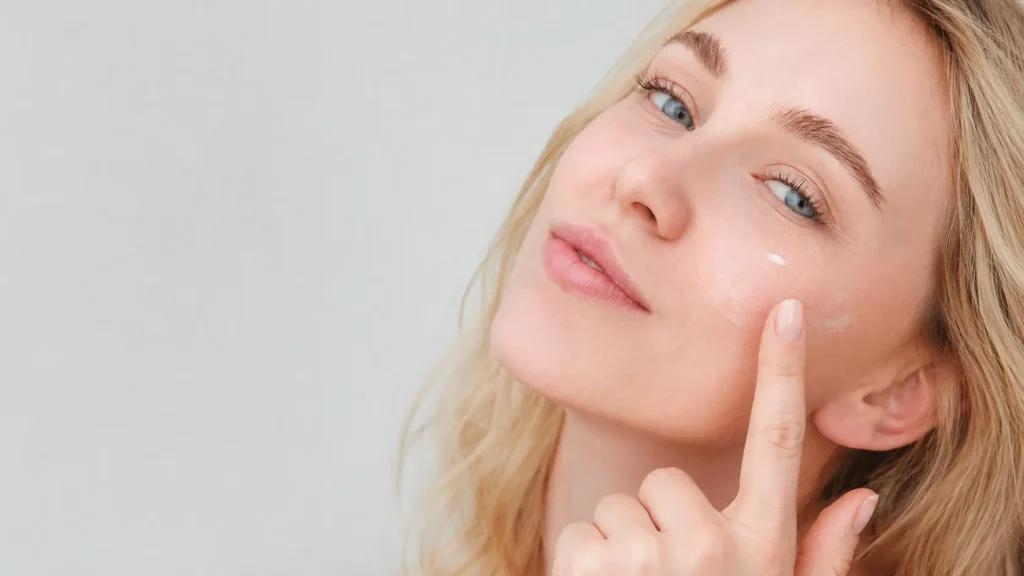
Important: Use estradiol cream on your face only with your healthcare provider’s advice. Estradiol is a hormone medication. Incorrect use may increase the risk of side effects.
Use these steps only with your healthcare provider’s guidance.
1: Cleanse Your Face
Wash your face with a gentle, fragrance-free cleanser. Remove dirt, oil, makeup, and sunscreen.
Avoid harsh scrubs and exfoliants before applying estradiol cream. They may irritate your skin.
Pat your face dry using a clean, soft towel.
2: Wash Your Hands
Always wash your hands before touching your face or applying the medication.
Clean hands help reduce the risk of introducing bacteria to your skin.
3: Use the Prescribed Amount
Apply only the amount recommended by your healthcare provider.
Using extra cream will not produce faster or better results. Instead, it may increase hormone absorption through the skin. This can raise the risk of side effects.
4: Apply a Thin Layer
Place a small amount of cream on your fingertip.
Spread a thin, even layer over the treatment area.
Do not rub or massage the cream into the skin for an extended period.
5: Avoid Sensitive Areas
Unless your healthcare provider instructs otherwise, avoid applying estradiol cream to:
Eyes
Eyelids
Lips
Inside the nose
Open cuts
Broken or infected skin
If the cream gets into your eyes, rinse your eyes with clean water.
6: Allow the Cream to Absorb
Let the medication absorb for a few minutes. Then apply moisturizer, sunscreen, or makeup.
Avoid touching or washing the treated area immediately after application unless instructed otherwise.
7: Wash Your Hands Again
Wash your hands after applying the cream. This helps prevent the medication from spreading to other areas or people.
Best Time to Apply Estradiol Cream
Many healthcare providers recommend applying topical medications in the evening before bedtime. At night, the skin is usually clean. It has less contact with sunlight, sweat, and pollutants.
Always follow the schedule from your healthcare provider. Treatment plans may vary based on your needs.
When Is the Best Time to Apply Estradiol Cream?
The correct amount depends on:
- Your current medical condition
- Your hormone levels
- Your healthcare provider’s advice
The strength of the prescribed cream
Never increase the amount or frequency of application on your own. More cream does not mean better results.
How Often Should You Apply It?
The application schedule should always follow your prescription.
Do not:
Apply it more than directed.
Skip doses without medical advice.
Double the next application if you miss one.
If you miss a dose, follow your healthcare provider’s instructions. Do not apply extra cream.
Can You Use Estradiol Cream Every Day?
Some treatment plans involve daily use, while others use a less frequent schedule. The right approach depends on your medical condition and your prescriber’s recommendations.
Daily use without medical supervision is not recommended.
Can You Wear Makeup After Applying Estradiol Cream?
Yes, if your healthcare provider has advised facial use.
However, wait until the cream has absorbed before applying:
Foundation
Primer
Concealer
Sunscreen
Moisturizer
Applying makeup too soon may reduce absorption or cause the products to mix.
Can You Use Moisturizer with Estradiol Cream?
Often, yes.
A gentle, fragrance-free moisturizer can help reduce dryness and support the skin barrier.
Let the estradiol cream absorb before applying moisturizer. Follow your healthcare provider’s instructions if they recommend a different routine.
Can You Combine Estradiol Cream with Other Skincare Products?
Some skincare ingredients may be compatible, while others can increase irritation.
Hyaluronic Acid
Hyaluronic acid is generally well tolerated and may help improve hydration.
Ceramides
Ceramide-based moisturizers help support the skin barrier. They may also work well with prescription treatments.
Vitamin C
Vitamin C may work well for some people. However, it can irritate sensitive skin. If you use both, ask your healthcare provider about the best application schedule.
Retinol or Tretinoin
Using retinoids together with estradiol cream may increase redness, dryness, or irritation. Use the combination with guidance from a healthcare professional.
Exfoliating Acids
Products with glycolic acid, salicylic acid, or lactic acid may increase skin sensitivity. Discuss their use with your healthcare provider if you use estradiol cream on your face.
Safety Tips for Using Estradiol Cream on the Face
To help reduce the risk of complications:
Use the medication exactly as prescribed.
Do not share your prescription with anyone else.
Keep the cream away from children and pets.
Store it according to the manufacturer’s instructions.
Avoid applying it to damaged or infected skin.
Wear sunscreen daily to protect your skin from UV damage.
Inform your healthcare provider about all medications and supplements you are taking.
Attend follow-up appointments if recommended.
Common Mistakes to Avoid
Avoid these common errors when using estradiol cream:
Applying more cream than prescribed.
Using it as a general anti-aging product without medical advice.
Applying it to broken or irritated skin.
Skipping sunscreen during the day.
Mixing it with many active skincare products without guidance.
Stopping treatment without consulting your healthcare provider.
Sharing the medication with friends or family members.
Expecting immediate results after only a few applications.
Follow your prescribed treatment plan to get safe and effective results. This can also help reduce unnecessary risks.
Possible Side Effects of Estradiol Cream on the Face
Many people tolerate estradiol cream when used as directed. However, it is still a prescription hormone medication. Like all medications, it can cause side effects. Some are mild and temporary, while others may need medical attention.
Common Side Effects
These side effects are usually mild and may improve as your skin adjusts to the treatment:
Mild redness
Itching
Burning or stinging sensation
Dryness
Skin irritation
Increased skin sensitivity
Mild swelling
Tenderness at the application site
If these symptoms become severe or do not improve, contact your healthcare provider.
Less Common but Serious Side Effects
Estradiol can enter the skin. Some people may experience hormone-related side effects.
Contact your healthcare provider immediately if you notice:
Severe headache
Vision changes
Chest pain
Shortness of breath
Unusual swelling in the legs
Breast pain or unusual breast changes
Heavy or unexpected vaginal bleeding
Severe allergic reactions such as facial swelling or difficulty breathing
These symptoms need prompt medical evaluation.
Who Should Avoid Estradiol Cream on the Face?
Estradiol cream is not suitable for everyone.
Avoid using it unless your healthcare provider recommends it if you have:
A history of breast cancer
Estrogen-dependent cancers
Blood clotting disorders
Previous stroke or heart attack
Severe liver disease
Unexplained vaginal bleeding
Allergy to estradiol or any ingredient in the cream
Pregnancy
Breastfeeding, unless advised by your healthcare provider
Always provide your complete medical history before starting treatment.
Drug Interactions
Some medications may change how estradiol works. They may also increase the risk of side effects.
Tell your healthcare provider if you take:
Hormone replacement therapy
Birth control pills containing estrogen
Blood thinners
Corticosteroids
Anti-seizure medications
Some antibiotics
Herbal supplements such as St. John’s Wort
Never start or stop medications without consulting your healthcare provider.
How Long Does It Take to See Results?
Results vary depending on:
Your age
Hormone levels
Skin condition
health
Consistency of treatment
Some people notice better skin hydration within a few weeks. Changes in skin texture and elasticity may take several months.
Remember that estradiol cream is not a quick cosmetic treatment. Improvements, if they occur, are usually gradual.
Tips for Getting the Best Results
Use estradiol cream on your face only if prescribed by your healthcare provider. These habits may support healthy skin.
Follow the prescribed application schedule.
Clean your face before each application.
Use a gentle moisturizer to maintain hydration.
Apply sunscreen with SPF 30 or higher every day.
Drink enough water.
Eat a balanced diet rich in fruits and vegetables.
Avoid smoking, which can speed up skin aging.
Get enough sleep to support normal skin repair.
These healthy habits work together with any prescribed treatment to improve skin health.
Common Questions
Can I use estradiol cream on my face every day?
Only if your healthcare provider instructs you to do so. The correct schedule depends on your individual treatment plan.
Does estradiol cream remove wrinkles?
Estradiol cream is not a wrinkle-removal product. Estradiol may improve skin hydration and quality for some women with low estrogen. This may make fine lines less noticeable.
Can younger women use estradiol cream for anti-aging?
Estradiol cream is generally not recommended for younger women with normal hormone levels. A healthcare provider may recommend it for specific medical reasons.
Can I use estradiol cream around my eyes?
No. Avoid estradiol cream near your eyes unless your healthcare provider recommends it.
Should I use sunscreen while using estradiol cream?
Yes. Use sunscreen daily to protect your skin from UV damage. It may also help prevent premature aging.
Can I stop using estradiol cream once my skin improves?
Do not stop or change your treatment plan without consulting your healthcare provider.
Can men use estradiol cream on their face?
Estradiol cream is generally not prescribed for cosmetic facial use in men. Use estradiol cream only with a healthcare provider’s recommendation.
Is estradiol cream better than regular anti-aging creams?
No, it is not always necessary. Common skincare products can help improve signs of skin aging. Estradiol cream is a prescription hormone medication for specific medical needs. It should not replace a standard skincare routine.
Expert Tips
How to use estradiol cream:
Always follow your healthcare provider’s instructions.
Never apply more than the prescribed amount.
Be patient—results may take time.
Continue practicing good skincare habits.
Schedule regular follow-up appointments if treatment continues for a long time.
Report any unusual symptoms as soon as possible.
Medical supervision helps balance the benefits and risks of estradiol cream.
Conclusion
Estradiol cream may help some postmenopausal women with low estrogen levels. Studies suggest it may improve skin hydration and support healthy skin structure. It may also help improve elasticity when used under medical supervision.
However, estradiol cream is a prescription hormone medication, not a cosmetic anti-aging cream. Using estradiol cream without medical advice may increase the risk of side effects.
If your healthcare provider recommends estradiol cream, follow the instructions. Use the recommended amount. Follow a gentle skincare routine with sunscreen and moisturizer.
Healthy, youthful-looking skin depends on more than a single product. Healthy habits help keep your skin healthy. These include good nutrition, sleep, sun protection, and skincare.
Before using estradiol cream on your face, consult a qualified healthcare provider. They can decide if it is suitable for your skin and health needs.
