
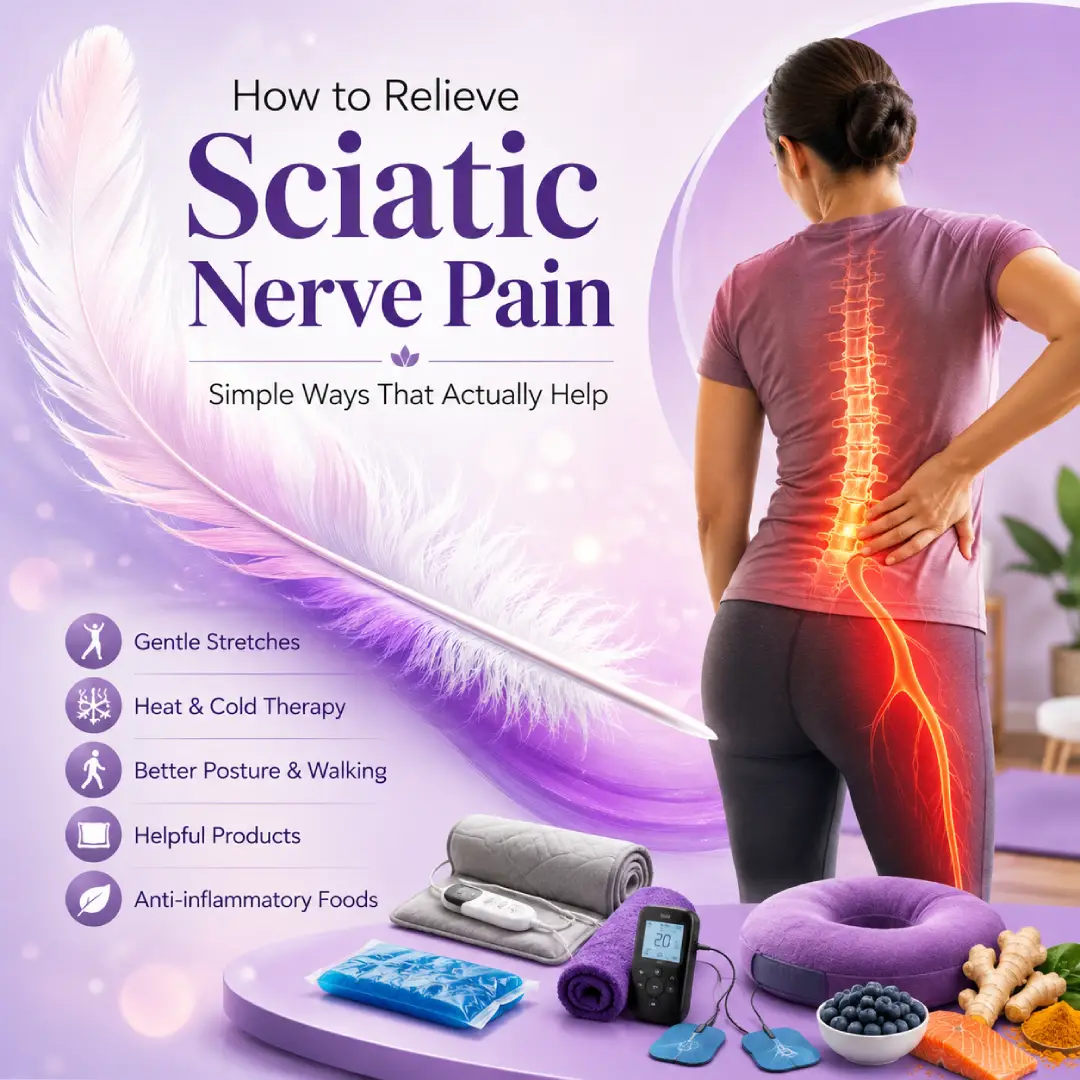

How to Relieve Sciatic Nerve Pain
Sciatic nerve pain can really slow you down.
One moment you’re fine, and the next there’s a sharp, burning pain running from your lower back down one leg. Sitting becomes uncomfortable. Walking feels stiff. Even getting out of bed can take a moment.
If this sounds familiar, you’re not alone.

Sciatica is actually very common. And the frustrating part? It can show up without warning.
The good news is this — you don’t always need heavy treatment to feel better. Many people improve with small daily habits, gentle movement, and a bit of patience.
Let’s go through how to relieve sciatic nerve pain in a simple, realistic way.
What Is Sciatic Nerve Pain?
Sciatica happens when the sciatic nerve gets irritated or compressed.
This nerve is a big one. It runs from your lower back, through your hips, and down each leg.
When something presses on it, pain can show up in different ways:
• Sharp or shooting pain
• Burning feeling
• Tingling or “pins and needles”
• Numbness in the leg
• Weakness in one side
Sometimes it stays mild. Other times, it can hang around for weeks.
Common Causes of Sciatica
There isn’t just one cause. It can come from a few different things.
Some common triggers include:
• Herniated or slipped discs
• Sitting for long hours
• Poor posture
• Tight hip or back muscles
• Heavy lifting the wrong way
• Pregnancy-related pressure
• Spinal irritation or injury
And honestly, sometimes it’s just daily habits building up over time.
How to Relieve Sciatic Nerve Pain at Home
Let’s talk about what usually helps first.
Nothing fancy. Just simple things you can try at home.
The key here is this: go slow. Don’t rush your body.
Gentle Stretching Helps More Than You Think
Tight muscles around your lower back and hips can make sciatica worse.
Stretching helps release that pressure.
Some commonly used stretches:
• Knee-to-chest stretch
• Hamstring stretch
• Piriformis stretch
• Figure-4 stretch
The figure-4 stretch is a favorite for many people dealing with sciatica.
How to do the Figure-4 stretch
• Lie on your back
• Bend both knees
• Cross one ankle over the opposite knee
• Pull the lower leg gently toward your chest
• Hold for around 30 seconds
Then switch sides.
That’s it. Simple but effective.
Don’t push into pain. If it hurts, ease off a bit. Gentle movement works better than forcing it.
Heat Therapy for Relaxed Muscles
Heat is one of those simple things that often gives quick relief.
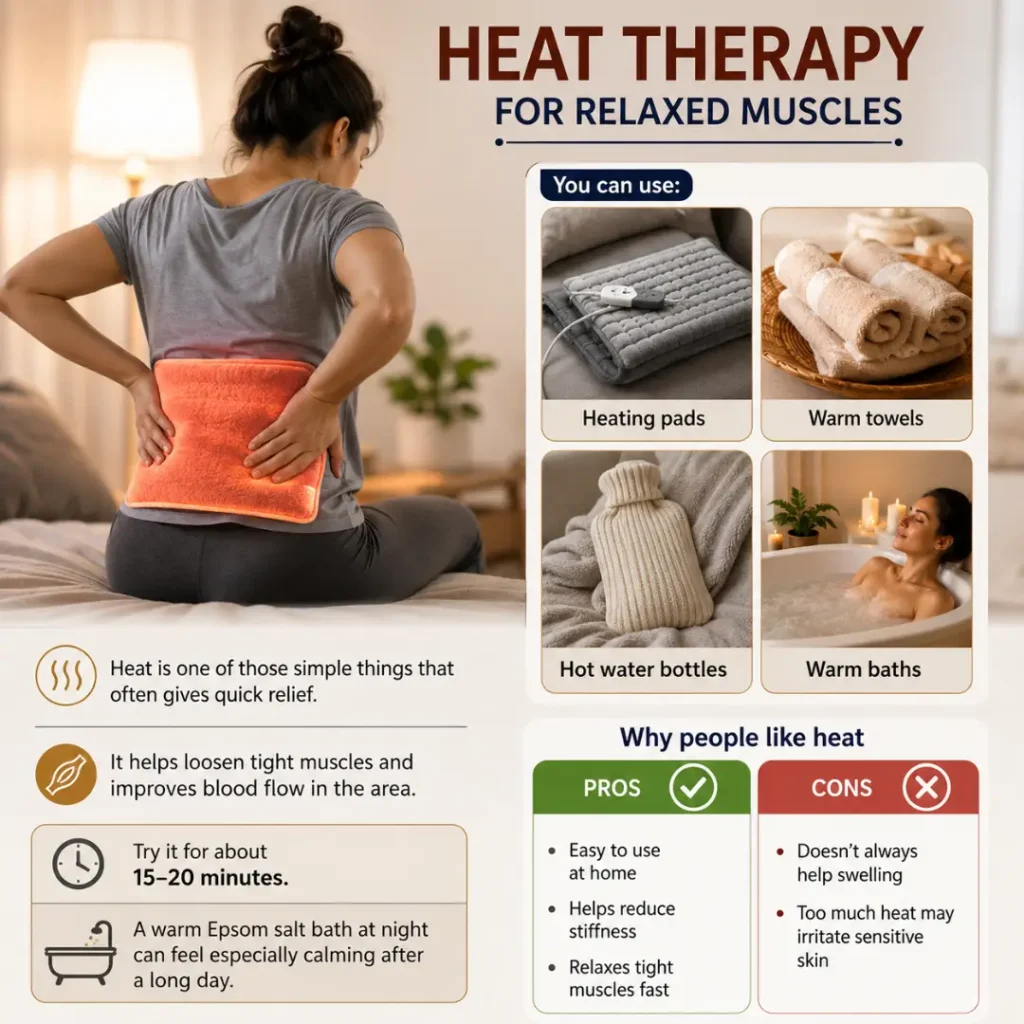
It helps loosen tight muscles and improves blood flow in the area.
You can use:
• Heating pads
• Warm towels
• Hot water bottles
• Warm baths
Try it for about 15–20 minutes.
A warm Epsom salt bath at night can feel especially calming after a long day.
Why people like heat
Pros
• Easy to use at home
• Helps reduce stiffness
• Relaxes tight muscles fast
Cons
• Doesn’t always help swelling
• Too much heat may irritate sensitive skin
Cold Packs Can Help Too
If your pain feels sharp or inflamed, cold therapy might help more.
Cold packs can numb the area and reduce swelling for a short time.
Use it like this:
• Apply for 10–15 minutes
• Wrap it in a cloth first
• Take breaks between sessions
Some people switch between heat and cold depending on how the pain feels that day.
Walking a Little Can Make a Difference
When sciatica flares up, the first instinct is usually to rest all day.
But too much rest can make things worse.
Short walks can help:
• Improve blood flow
• Loosen tight muscles
• Reduce stiffness
You don’t need long walks or workouts.
Even 5–10 minutes around your home can help your body feel less stiff.
Start small. Listen to your body. That matters most.
Sitting the Right Way Really Helps
Long sitting hours can put pressure on your lower back and hips.
And that pressure often makes sciatic pain worse.
A few small changes can help:
• Sit with lower back support
• Keep feet flat on the floor
• Avoid crossing legs for long periods
• Stand up every 30–60 minutes
A simple cushion can also reduce pressure on your lower back, especially if you work at a desk.
Best Sleeping Positions for Sciatica
Night time can be tricky when you have sciatic nerve pain.
Some positions can reduce pressure:
• Sleeping on your side with a pillow between knees
• Sleeping on your back with a pillow under knees
These help keep your spine in a more relaxed position.
Also, pay attention to your mattress.
If it’s too soft, your lower back may sink too much, which can make pain worse over time.
Helpful Products for Sciatic Nerve Pain Relief
You don’t need a lot of products. But a few simple ones can make daily life easier.
Let’s look at the common ones.
Heating Pads
Heating pads are one of the easiest ways to get relief at home.
They work by relaxing tight muscles around your lower back.
Pros
• Simple to use
• Affordable
• Good for muscle tightness
Cons
• Temporary relief
• Needs careful use on sensitive skin
Seat Cushions
If sitting triggers your pain, this can help a lot.
Memory foam cushions reduce pressure on the hips and lower spine.
Many people notice less discomfort during:
• Office work
• Long driving
• Sitting at home
TENS Units
TENS devices send mild electrical pulses to the skin.
They are used by many people for nerve and muscle pain relief.
Pros
• Drug-free option
• Portable
• Adjustable settings
Cons
• Feels unusual at first
• Doesn’t work the same for everyone

Foam Rollers
Foam rollers help release tight muscles in the legs and hips.
They can feel uncomfortable in the beginning. That’s normal.
Start slow. Gentle pressure is enough.
Compression Supports
Some people use back braces or support belts during work.
They may help reduce strain for short periods.
But they shouldn’t replace movement or stretching.
Think of them as support, not a long-term solution.
Foods That May Help with Inflammation
Food won’t “cure” sciatica, but it can support your body.
Some helpful options include:
• Leafy greens
• Berries
• Fatty fish
• Ginger
• Turmeric
• Nuts and seeds
• Olive oil
On the other hand, try to limit:
• Sugary drinks
• Fried foods
• Processed snacks
• Excess alcohol
Small changes, done consistently, may help your recovery feel smoother.
Common Mistakes That Make Sciatica Worse
Sometimes, pain gets worse because of simple habits.
Let’s look at a few.
Sitting too long
Long sitting puts constant pressure on your lower back.
Even small breaks help.
Lifting incorrectly
Twisting while lifting can strain your back quickly.
Use your legs more than your back.
Ignoring early pain
Mild pain can turn worse if ignored too long.
Early stretching and movement often help more than waiting.
Staying in bed too much
Rest is good, but too much can make muscles stiff.
Light movement is usually better.
When You Should See a Doctor
Home care helps many people.
But don’t ignore serious signs.
See a doctor if you notice:
• Severe or worsening pain
• Weakness in the leg
• Numbness spreading
• Loss of bladder or bowel control
• Pain lasting several weeks
• Trouble walking
It’s always better to check early if something feels off.
Final Thoughts
Learning how to relieve sciatic nerve pain doesn’t have to feel complicated.
Most of the time, it comes down to small, steady habits.
Stretch a little. Walk when you can. Sit better. Use heat when needed.
And be patient with your body.
Helpful products like heating pads, seat cushions, or TENS units can support your routine, but they work best with daily movement and care.
Sciatica can be frustrating, yes. But many people improve step by step with the right approach.
Go slow. Stay consistent. Your body usually responds more than you expect.
