
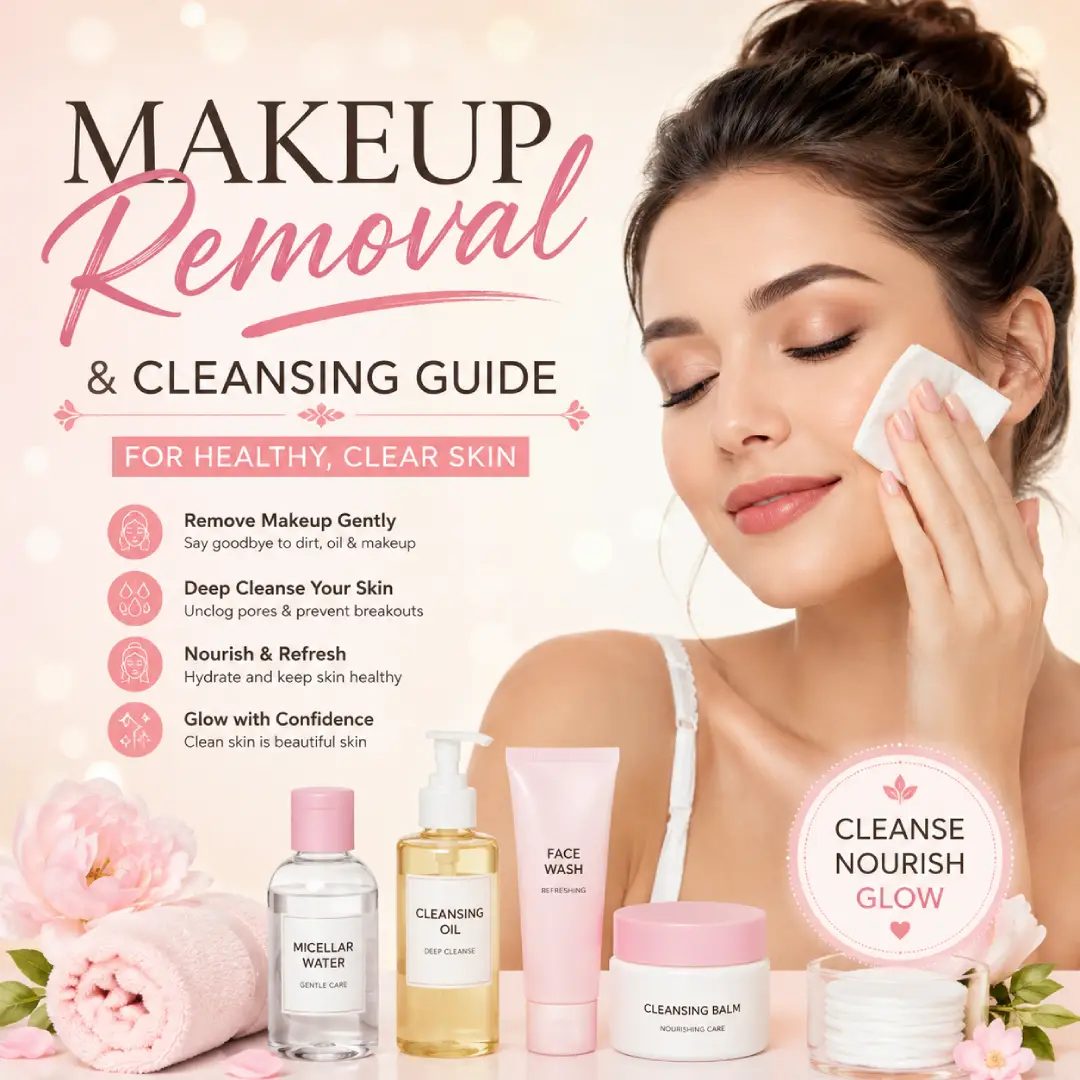

Most people love makeup. For instance, a little concealer, mascara, or lipstick can make you feel more confident in minutes. However, at the end of the day, makeup removal is just as important as applying makeup in the morning. And honestly? A lot of us rush through it.
Sometimes you’re tired. Sometimes you just want to get into bed as fast as possible. So you wipe your face quickly, skip cleansing, and hope for the best.
Your skin notices, though.
Sleeping in makeup can clog pores, dry out your skin, and lead to breakouts over time. In fact, even lightweight products like tinted moisturizer or SPF can build up on the skin if they are not removed properly.
The good news is that makeup removal doesn’t have to be complicated. After all, you don’t need a 15-step skincare routine or expensive products to do it properly.
Instead, a few simple habits can make a huge difference.
That’s why this guide covers everything you need to know about removing makeup gently and keeping your skin clean, fresh, and healthy.
Why Proper Makeup Removal Matters More Than People Think
Your skin repairs itself while you sleep. In fact, that’s when it works hardest.
For example, new skin cells form overnight. Meanwhile, oil production balances itself out. Your skin also gets rid of dirt and buildup from the day.
But when makeup sits on your face all night, it gets in the way of that process.
Specifically, foundation, concealer, mascara, sunscreen, and even setting spray can trap oil, sweat, and bacteria on the skin.
Over time, that can lead to:
- Clogged pores
- Blackheads
- Dull-looking skin
- Dry patches
- Irritation
- More breakouts
- Faster signs of aging
And yes, even “light makeup days” still count.
A little BB cream, SPF, or mascara may not seem like much, but your skin still needs a proper cleanse before bed.
Think of makeup removal as part of basic skin care, not an optional extra step.
How to Remove Makeup Properly
A good makeup removal routine doesn’t need to be perfect. It just needs to be gentle and consistent.
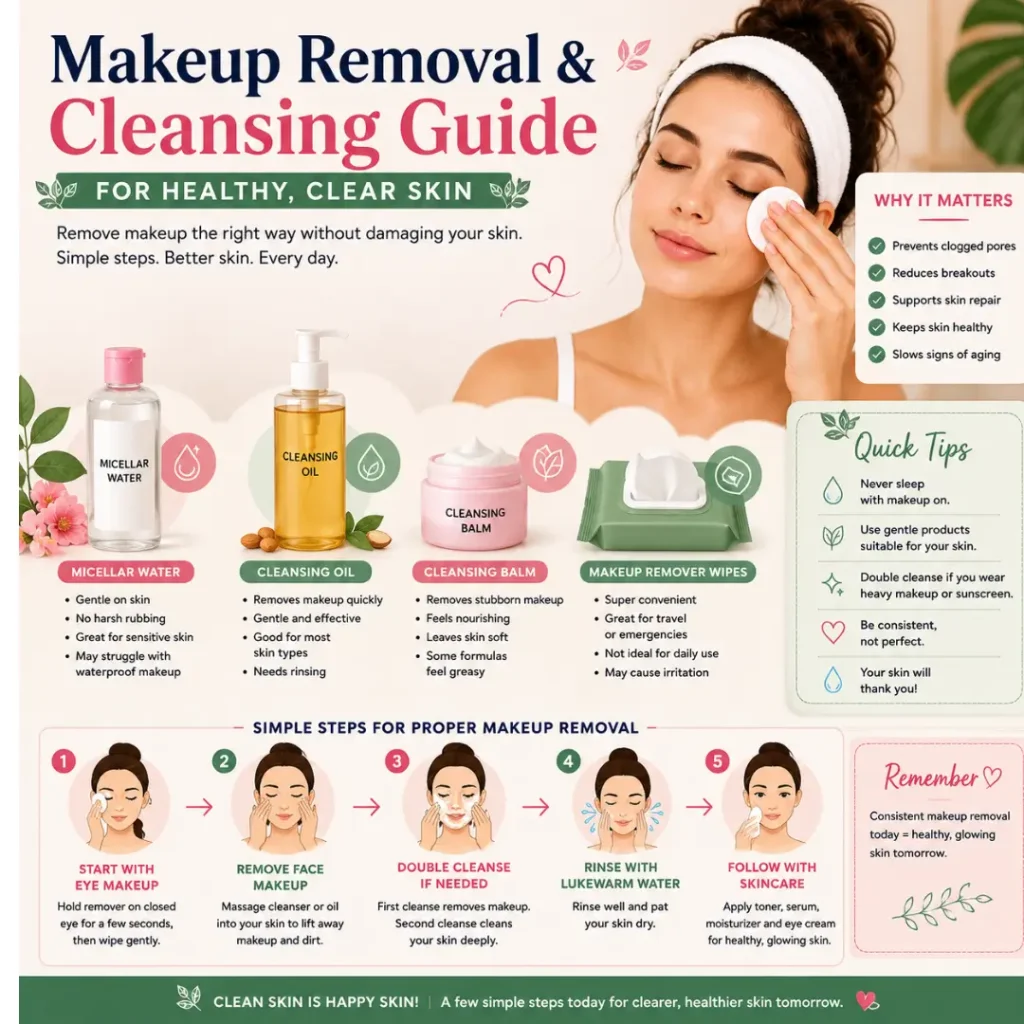
Here’s a simple step-by-step routine that works for most skin types.
Step 1: Start With Eye Makeup
Eye makeup is usually the hardest part to remove, especially waterproof mascara or liquid eyeliner.
The skin around your eyes is thin and delicate, so avoid rubbing too hard.
Instead:
- Soak a cotton pad with micellar water or makeup remover
- Hold it gently over your closed eye for 10–15 seconds
- Wipe downward softly
- Repeat if needed
Let the remover do the work. Scrubbing only irritates the skin and can even damage your lashes over time.
If you wear heavy eye makeup often, oil-based removers usually work best.
Step 2: Remove Foundation and Face Makeup
Once your eye makeup is gone, move to the rest of your face.
This part is easier, but people still miss spots all the time. Hairline, jawline, and around the nose are the usual problem areas.
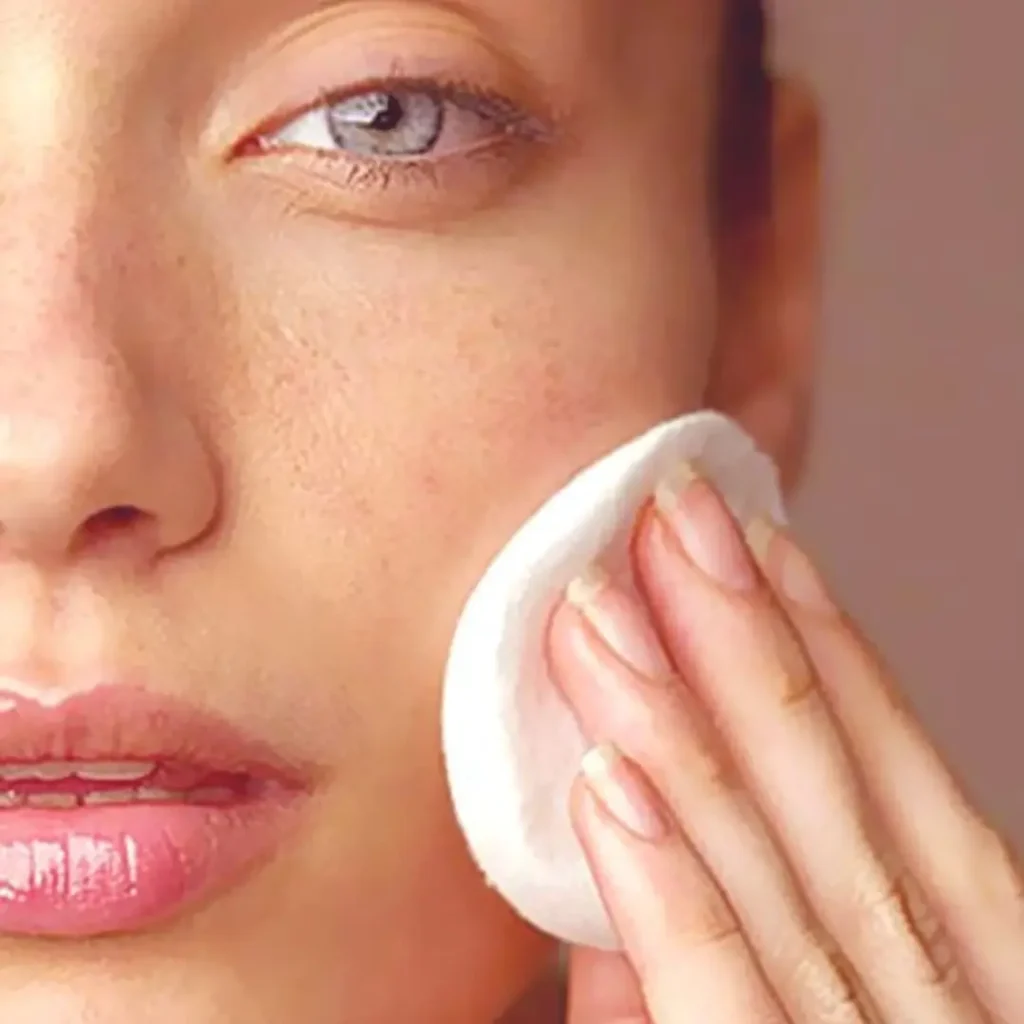
Use:
- Cleansing balm
- Oil cleanser
- Micellar water
- Cream cleanser
Massage the product into your skin gently using circular motions.
Take your time here. A rushed cleanse usually leaves makeup behind.
Step 3: Double Cleanse if Needed
If you wear heavy makeup, waterproof products, or sunscreen every day, double cleansing can really help.
It sounds fancy, but it’s simple.
The first cleanse breaks down makeup, oil, and SPF. The second cleanse actually cleans the skin itself.
Usually:
- First cleanse = oil cleanser or balm
- Second cleanse = gentle face wash
A lot of people notice fewer clogged pores and smoother skin after starting this habit.
Step 4: Rinse With Lukewarm Water
Hot water feels relaxing, but it can dry out your skin quickly.
Lukewarm water is much gentler.
After rinsing, pat your skin dry with a clean towel. Don’t rub aggressively. That only causes irritation, especially if your skin is sensitive.
Step 5: Follow With Skincare
Freshly cleaned skin absorbs skincare products much better.
After cleansing, apply:
- Toner
- Serum
- Moisturizer
- Eye cream (optional)
Even a simple moisturizer helps protect your skin barrier overnight.
Best Makeup Removal Products
There’s no single “best” makeup remover for everyone. Your skin type matters a lot.
Some people love micellar water. Others prefer cleansing balms or oils.
Here’s a breakdown of the most common options.
Micellar Water
Micellar water became popular for a reason. It’s simple, gentle, and easy to use.
Tiny cleansing molecules called micelles help lift dirt, oil, and makeup from the skin.
It works especially well for:
- Sensitive skin
- Dry skin
- Light makeup days
- Quick cleansing
Pros
- Gentle on skin
- No harsh rubbing
- Easy for travel
- No strong scent in many formulas
Cons
- May struggle with waterproof makeup
- Sometimes leaves residue behind
A quick rinse afterward usually fixes that.
Cleansing Balms
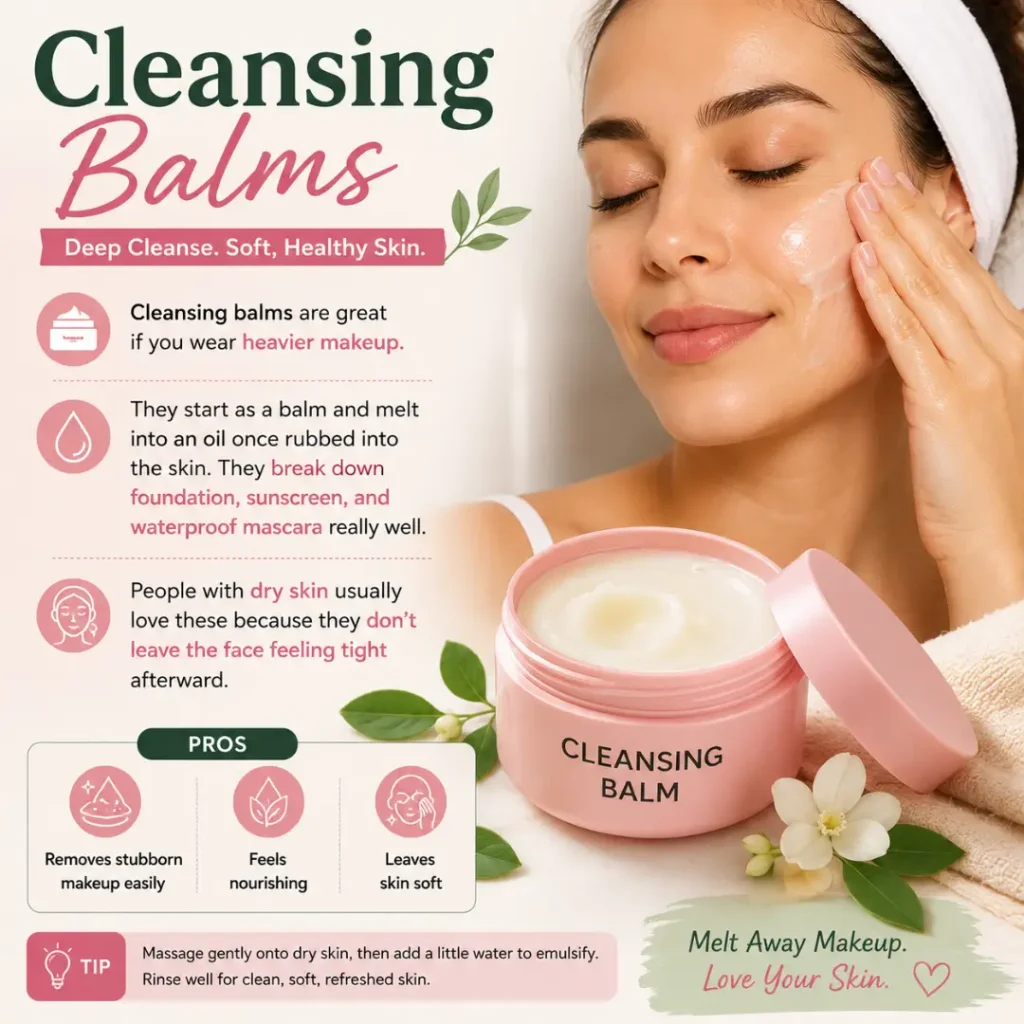
Cleansing balms are great if you wear heavier makeup.
They start as a balm and melt into an oil once rubbed into the skin. They break down foundation, sunscreen, and waterproof mascara really well.
People with dry skin usually love these because they don’t leave the face feeling tight afterward.
Pros
- Removes stubborn makeup easily
- Feels nourishing
- Leaves skin soft
Cons
- Some formulas feel greasy
- Not everyone likes the texture
Oil Cleansers
A lot of people with oily skin avoid oil cleansers at first. Ironically, they often work amazingly well for oily or acne-prone skin.
Oil helps dissolve oil. That includes makeup, sunscreen, and excess sebum.
Pros
- Removes makeup quickly
- Gentle on skin
- Good for most skin types
Cons
- Needs rinsing
- Cheap formulas may clog pores
Choosing non-comedogenic formulas helps.
Makeup Remover Wipes
Let’s be honest. Makeup wipes are convenient.
They’re great for:
- Travel
- Late nights
- Emergencies
- Gym bags
But they shouldn’t be your main cleansing method every day.
Most wipes don’t fully clean the skin. They often smear makeup around instead of removing it completely.
If you use wipes, try to follow up with a cleanser afterward.
How to Remove Mascara Without Makeup Remover
Running out of makeup remover happens to everyone.
Thankfully, there are a few simple alternatives at home that work surprisingly well.
Coconut Oil
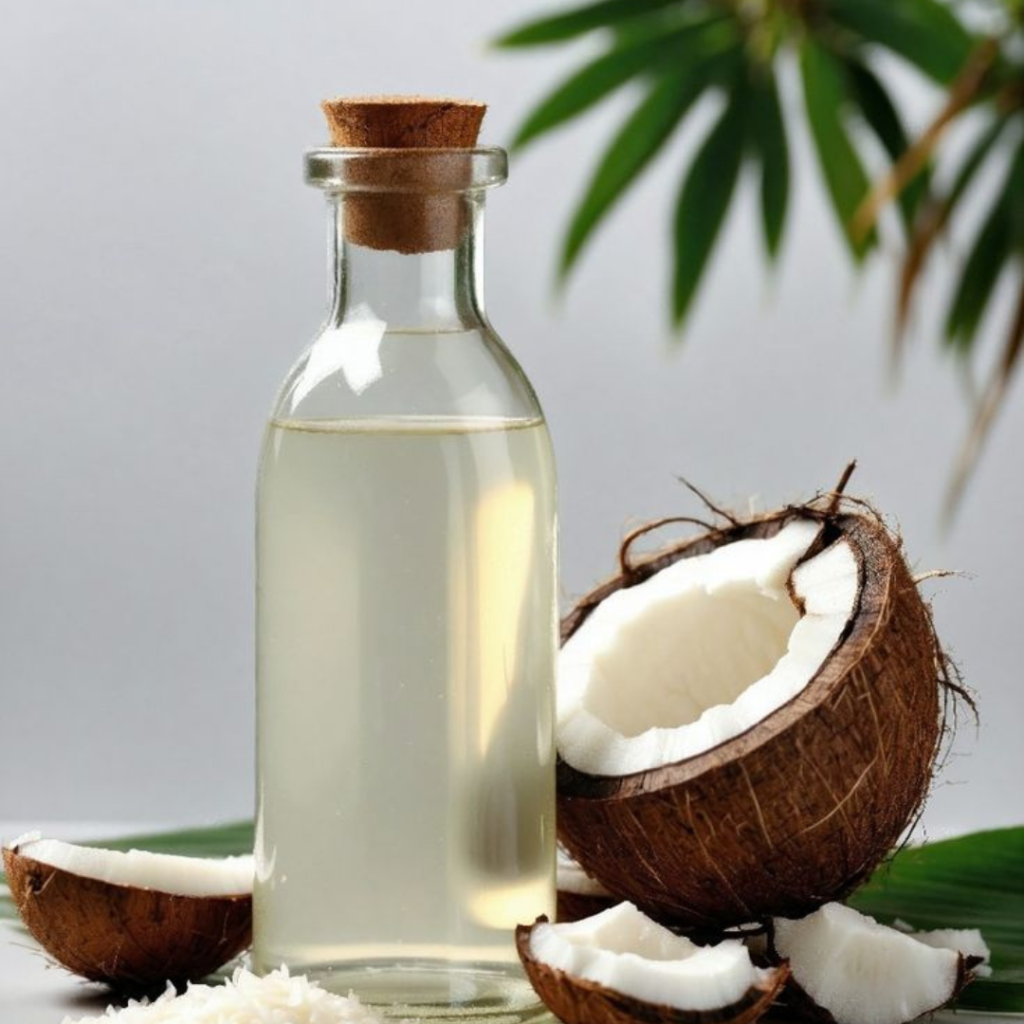
Coconut oil breaks down mascara very easily, including waterproof formulas.
Just:
Take a small amount
Massage gently onto lashes
Wipe away softly
Plus, it also leaves lashes feeling softer afterward.
However, just don’t overdo it if your skin breaks out easily.
Olive Oil
Similarly, olive oil works similarly to coconut oil.
A tiny amount is enough. But too much can feel greasy and messy.
Petroleum Jelly
Petroleum jelly, like Vaseline, works well for sensitive skin.
Simply apply a small amount to the lashes, let it sit briefly, then wipe gently with a soft cloth or cotton pad.
Baby Oil
Alternatively, baby oil is another simple option for removing stubborn eye makeup.
Overall, it’s gentle and usually doesn’t irritate the eye area.
Aloe Vera Gel
Pure aloe vera gel feels soothing, especially if your eyes feel irritated or tired.
Although it won’t remove heavy waterproof makeup as easily as oil, it still works surprisingly well for lighter products.
How to Remove Makeup Without Makeup Remover
Sometimes you run out of everything.
No remover. No cleanser. Nothing.
It happens.
Luckily, there are still a few household items that can help in a pinch.
Whole Milk
Admittedly, this sounds odd, but whole milk actually works pretty well for light makeup.
That’s because the fat content helps break makeup down naturally.
Simply dip a cotton pad into milk and wipe gently across the skin.
Plain Yogurt
Plain yogurt contains lactic acid, which helps loosen makeup and dirt.
Additionally, it also feels calming on dry or irritated skin.
Honey and Baking Soda
Honey helps soften the skin, while baking soda adds gentle exfoliation.
However, use this carefully. Since too much baking soda can irritate sensitive skin, it’s definitely not an everyday method.
How to Remove Makeup Without Cleanser
If you have makeup remover but no cleanser, don’t panic.
In fact, you can still clean your skin fairly well.
Here’s a simple method:
Use micellar water, oil, or balm first
Massage gently with fingertips
Rinse with lukewarm water
Wipe with a clean cloth if needed
Finally, rose water can also help remove leftover residue and freshen the skin afterward.
Common Makeup Removal Mistakes
Often, a lot of skin irritation comes from simple habits people don’t even realize are causing problems.
Here are a few common mistakes.
Scrubbing Too Hard
More pressure doesn’t mean cleaner skin. In fact, aggressive scrubbing can damage your skin barrier and leave your face red or irritated.
Instead, gentle cleansing works better.
Skipping Double Cleansing
If you wear long-wear foundation, sunscreen, or heavy makeup, one cleanse may not fully remove everything.
As a result, leftover residue can clog pores over time.
Using Dirty Towels or Pads
Dirty cloths transfer bacteria back onto your face.
Instead, try using fresh towels or reusable pads that are washed regularly.
Using Harsh Products
Alcohol-heavy removers can leave skin dry and tight.
So, if your face feels uncomfortable after cleansing, your products may be too harsh.
Rushing the Process
Honestly, this is probably the biggest issue.
Most people only spend 20 seconds removing makeup. Unfortunately, that usually isn’t enough.
Instead, taking an extra minute or two can make a huge difference.
Makeup Removal Tips for Different Skin Types
Every skin type reacts differently. After all, what works for dry skin may not work for oily skin.
For Oily Skin
Try gel cleansers or oil cleansers
Double cleanse regularly
Avoid overly thick products
Interestingly, a lot of oily skin problems actually come from over-drying the skin.
For Dry Skin
Use cleansing balms or cream cleansers
Avoid alcohol-based removers
Moisturize immediately afterward
Overall, dry skin needs cleansing that feels nourishing, not stripping.
For Sensitive Skin
Choose fragrance-free products
Avoid harsh scrubs
Stick with gentle micellar water or cream cleansers
In short, simple routines are usually best for sensitive skin.
For Combination Skin
Admittedly, combination skin can be tricky.
For instance, you may need lightweight products in oily areas and richer products in dry areas.
Sometimes, mixing products works better than relying on one cleanser for everything.
Should You Use Cleansing Brushes or Devices?
Cleansing devices became extremely popular over the last few years.
However, some people love them, while others find them too harsh.
Specifically, they can help:
Remove leftover makeup
Deep clean pores
Improve circulation slightly
Still, they’re not essential.
Therefore, if your skin is sensitive or acne-prone, use them carefully and not every day.
Also, always clean the brush heads properly, since dirty cleansing tools can easily spread bacteria.
Honestly, a good cleanser and gentle hands are usually enough for most people.
Simple Makeup Removal Routine for Busy Nights
Some nights you’re exhausted. And that’s normal.
Here’s a quick version of the routine:
Remove eye makeup
Use cleansing balm or micellar water
Rinse with lukewarm water
Use a gentle cleanser if needed
Pat dry
Moisturize
That’s it.
Importantly, it doesn’t need to be perfect. Just consistent.
Final Thoughts
Good skin doesn’t come from expensive products alone. Rather, a lot of it comes from simple habits done consistently.
In fact, removing makeup properly is one of those habits.
You don’t need a complicated skincare routine. Instead, you just need to clean your skin gently, avoid harsh scrubbing, and use products that work for your skin type.
So, start simple.
Ultimately, find a remover you actually enjoy using. Keep your routine realistic. And try not to sleep in your makeup too often — your future skin will definitely appreciate it.
Related Topics You May Like
Best Micellar Waters for Sensitive Skin
Easy Nighttime Skincare Routine for Beginners
Does Double Cleansing Really Help?
Best Cleansing Balms for Heavy Makeup.
