


Best Shampoo for Dry Scalp: Easy Tips for a Healthier Scalp and Softer Hair
Dealing with a dry scalp can get frustrating really fast.
Your scalp feels itchy all day. Meanwhile, tiny flakes show up on dark clothes. Sometimes your hair even feels rough and lifeless, no matter what products you use.
Honestly, a lot of people go through this.
In fact, dry scalp is more common than most people think. Weather changes, hot showers, stress, harsh shampoos, and even not drinking enough water can all play a part.
Fortunately, the good news is that small changes can help a lot.
For instance, you usually do not need a complicated hair routine or expensive salon products.
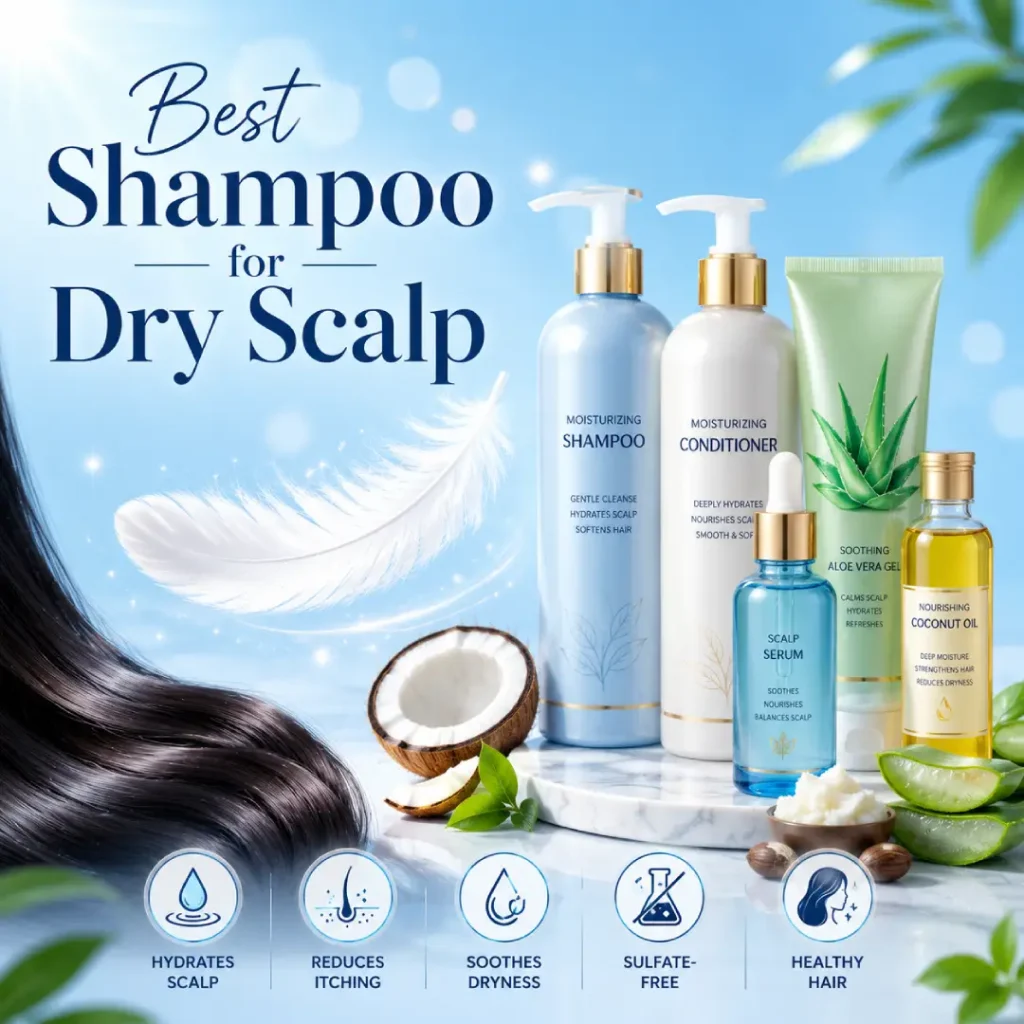
In many cases, simply switching to the best shampoo for dry scalp and being a little gentler with your hair can make a noticeable difference.
As a result, some people begin to notice improvement within a couple of weeks, although results can vary from person to person.
In fact, some people see improvement within a couple of weeks.
- What causes dry scalp
- How to choose the right shampoo
- Ingredients that may help
- Hair care mistakes that make dryness worse
- Helpful products for scalp care
- Easy daily habits for healthier hair
So, let’s start with why dry scalp happens in the first place.
What Causes Dry Scalp?
Essentially, dry scalp happens when your scalp loses moisture and becomes irritated.
For some people, it happens during winter. For others, meanwhile, it starts after using a harsh shampoo or washing hair too often.
Sometimes it is mild; other times, however, it becomes annoying enough to affect your daily routine.
Here, then, are a few common causes.
Cold and Dry Weather
To begin with, cold weather can dry out your skin and scalp quickly.
As a result, many people notice more itching and flakes during winter months.
Additionally, indoor heating can make the problem worse too.
Harsh Shampoos
Sometimes, shampoos clean a little too well.
In other words, they remove dirt and oil, but they also strip away the natural moisture your scalp needs.
So, if your scalp feels tight right after washing, your shampoo may be too strong.
Washing Hair Too Much
Interestingly, a lot of people think washing more often will fix flakes.
But sometimes, it does the opposite.
Specifically, daily washing may remove natural oils and leave your scalp even drier.
Heat Styling
Similarly, blow dryers, straighteners, and curling irons can slowly dry out the scalp and hair.
Over time, using high heat every day can make irritation worse.
Dehydration
Likewise, your scalp needs hydration too.
Therefore, if your body is low on water, dryness may become more noticeable.
Skin Conditions
Sometimes, dry scalp is linked to things like:
- Dandruff
- Eczema
- Psoriasis
In such cases, if the itching becomes severe or painful, it is best to speak with a doctor.
Signs You May Need the Best Shampoo for Dry Scalp
To clarify, dry scalp and dandruff are not always the same thing.
Generally, dry scalp causes smaller, lighter flakes and tight skin.
For example, you may notice:
- Itching
- Small white flakes
- Dry feeling skin
- Irritation after washing
- Rough hair near the roots
- Tightness around the scalp
If this sounds familiar, then your current shampoo may not be working for your scalp type.
Why the Right Shampoo Matters
Naturally, not all shampoos are made for dry scalp.
In fact, some products contain strong cleansers, alcohol, or heavy fragrance that can make dryness worse.
Ideally, the best shampoo for dry scalp should clean gently without making your scalp feel stripped.
Overall, a good shampoo should leave your scalp feeling:
- Clean
- Comfortable
- Soft
- Calm
Rather than tight or itchy.
Ultimately, that balance matters more than people realize.
Ingredients That May Help Dry Scalp
Admittedly, hair product labels can feel confusing sometimes.
Still, there are a few ingredients people often look for when dealing with dryness and irritation.
Aloe Vera
First of all, aloe vera is known for its soothing feel.
Because of this, it is commonly used in skincare and scalp care products.
Why people like it:
- Feels calming on itchy skin
- Adds light moisture
- Works well for sensitive scalps
Coconut Oil
Similarly, coconut oil is popular in shampoos for dry hair and scalp.
Specifically, it helps soften rough areas and adds moisture.
Benefits:
- Helps reduce dryness
- Makes hair feel softer
- May improve rough texture
Shea Butter
In contrast, shea butter is richer and heavier than some other ingredients.
Therefore, it works especially well for thick, curly, or very dry hair.
Benefits:
- Locks in moisture
- Helps soften dry strands
- Supports smoother hair
Glycerin
Meanwhile, glycerin helps attract moisture.
That is why it is often used in hydrating shampoos.
Benefits:
- Helps scalp stay hydrated
- Reduces dry feeling
- Supports softer skin
Tea Tree Oil
Likewise, tea tree oil is often used for itchy or flaky scalp problems.
Overall, it gives a fresh, clean feeling.
Benefits:
- Helps reduce itchiness
- May help with buildup
- Leaves the scalp feeling refreshed
Ingredients That May Make Dry Scalp Worse
On the other hand, some shampoos can irritate sensitive scalps without you realizing it.
Strong Sulfates
To begin with, harsh sulfates can strip away too much oil.
At first, your scalp may feel super clean, but dryness often returns even worse later.
Heavy Fragrance
Similarly, very strong scents may irritate sensitive skin.
Instead, fragrance-free or lightly scented shampoos usually feel gentler.
Alcohol-Based Products
Likewise, some styling products contain alcohol that dries out hair and scalp over time.
How to Choose the Best Shampoo for Dry Scalp
Overall, the best shampoo for dry scalp depends on your hair type too.
After all, not everybody needs the same formula.
If You Have Fine Hair
In this case, choose lightweight moisturizing shampoos.
Otherwise, heavy products may leave fine hair greasy or flat.
If You Have Thick Hair
Conversely, creamier formulas often work better, since thick hair usually needs more moisture.
If You Have Curly Hair
Typically, curly hair tends to become dry more easily.
So, look for:
- Sulfate-free shampoos
- Moisturizing formulas
- Oils and butters
Overall, curly hair usually responds better to gentle products.
If You Have Color-Treated Hair
In this case, use color-safe moisturizing shampoos.
Otherwise, strong cleansing shampoos may fade hair color faster.
How Often Should You Wash Dry Scalp Hair?
Admittedly, there is no perfect schedule for everyone.
For instance, some people wash every other day, while others only wash two or three times a week.
Either way, the important thing is paying attention to how your scalp feels.
So, if your scalp feels tight right after washing, you may be washing too often or using a harsh shampoo.
Simple Habits That Can Help Dry Scalp
Of course, the best shampoo for dry scalp helps, but daily habits matter too.
In fact, small changes can improve your scalp more than you think.
Use Warm Water Instead of Hot Water
To start, very hot water can dry out your scalp quickly.
Instead, warm water is usually much gentler.
Be Gentle While Washing
Also, you do not need to scrub hard.
Instead, use your fingertips and massage the scalp gently.
Otherwise, rough washing can increase irritation.
Limit Heat Styling
Similarly, too much heat can make dryness worse.
So, try to reduce:
- Blow drying
- Flat irons
- Curling tools
Additionally, if you use heat often, applying a heat protectant spray may help.
Do Not Overuse Dry Shampoo
To be fair, dry shampoo can be useful sometimes.
However, too much buildup may irritate the scalp even more.
So, try not to use it every day.
Drink Enough Water
Likewise, hydration affects your skin, scalp, and hair too.
In fact, dryness sometimes improves when you simply drink more water consistently.
Helpful Products Besides Shampoo
Of course, sometimes shampoo alone is not enough.
In that case, a few extra products may help your scalp feel more comfortable.
Leave-In Conditioners
For example, leave-in conditioners help dry hair stay soft throughout the day.
Specifically, they work especially well for:
- Curly hair
- Frizzy hair
- Dry ends
Benefits:
- Adds moisture
- Helps with tangles
- Makes hair smoother
That said, just avoid using too much near the scalp.
Hair Oils
Similarly, hair oils can help with dryness and frizz.
Popular choices include:
- Argan oil
- Coconut oil
- Jojoba oil
- Rosemary oil
Benefits:
- Adds shine
- Softens hair
- Helps reduce roughness
Still, use small amounts so hair does not feel greasy.
Scalp Serums
In addition, scalp serums are becoming more popular now.
Typically, some formulas are designed to soothe irritation and support scalp moisture.
Benefits:
- Helps calm dry scalp
- Adds light hydration
- Supports scalp comfort
Deep Conditioning Masks
Likewise, hair masks give deeper moisture than regular conditioner.
Usually, many people use them once weekly.
Benefits:
- Helps dry hair feel softer
- Improves hydration
- Makes hair smoother
Especially, they can be helpful during colder months.
Common Mistakes That Make Dry Scalp Worse
Unfortunately, sometimes people accidentally make the problem worse without realizing it.
Using Too Many Products
For instance, too many styling products may cause buildup and irritation.
Instead, a simple routine often works better.
Scratching Too Much
Admittedly, it is hard not to scratch an itchy scalp.
But scratching, unfortunately, may increase irritation and redness.
Instead, gentle care usually works better.
Switching Products Too Quickly
Remember, some shampoos need time before you notice results.
So, constantly changing products may confuse your scalp even more.
Ignoring Stress and Sleep
Similarly, stress can affect your skin and scalp too.
As a result, poor sleep and stress sometimes make dryness feel worse.
Natural Remedies Some People Like
In addition, some people also try simple home remedies for dry scalp.
Of course, results can vary, but these are popular options.
Coconut Oil Massage
For example, a small amount of coconut oil may help soften dry areas.
Simply leave it on briefly before washing.
Aloe Vera Gel
Likewise, pure aloe vera feels cooling and soothing for many people.
Oatmeal Treatments
Similarly, oatmeal is often used in products for dry skin because it feels calming.
That is why some scalp care products include oatmeal extracts.
How Long Does It Take to See Improvement?
Generally, this depends on the cause of the dryness and the products you use.
For instance, some people notice less itching after only a few washes.
For others, however, it may take several weeks.
Above all, the biggest thing is consistency.
Therefore, using the best shampoo for dry scalp regularly usually works better than switching products every few days.
When You Should See a Doctor
For the most part, dry scalp problems improve with gentle care and better products.
But sometimes, medical advice is important.
So, talk with a doctor if:
- Your scalp becomes painful
- The itching gets severe
- You notice bleeding or cracks
- Red patches appear
- Hair loss increases
- Home remedies are not helping
Either way, it is always better to check if something feels unusual.
Final Thoughts
Ultimately, finding the best shampoo for dry scalp can make everyday life much more comfortable.
Ideally, the right shampoo should clean gently while helping your scalp stay calm and hydrated.
For instance, ingredients like aloe vera, coconut oil, shea butter, and glycerin may help reduce dryness over time.
That said, you do not need a perfect routine.
Usually, simple habits help the most:
- Use gentle products
- Avoid too much heat
- Drink enough water
- Wash carefully
- Give products time to work
After all, healthy hair often starts with a healthy scalp.
So, once your scalp feels balanced again, your hair usually becomes softer, smoother, and easier to manage too.
