


How to Get Rid of Lower Leg Pain Immediately
Lower leg pain can ruin your whole day.
For instance, even simple things like walking, standing, or climbing stairs can suddenly feel difficult. Sometimes the pain feels sharp and sudden, while other times it feels like soreness, tightness, cramping, or burning.

The good news is that many cases of lower leg pain are not serious. In fact, a lot of people feel better with simple home care and a little rest.
So, if you are searching for how to get rid of lower leg pain immediately, you are in the right place. This guide covers easy and practical ways to reduce pain fast and help your legs recover naturally.
Also, you do not need complicated treatments for mild pain, because small steps can often make a big difference.
Let’s start by understanding why lower leg pain happens in the first place.
Common Causes of Lower Leg Pain
Lower leg pain can happen for many different reasons.
For example, sometimes it starts after a workout, while other times it happens after standing too long or wearing uncomfortable shoes.
Here are some of the most common causes:
- Muscle cramps
- Overuse from walking or running
- Shin splints
- Tight calf muscles
- Poor blood circulation
- Dehydration
- Minor muscle strain
- Standing for long hours
- Weak muscles
- Poor footwear
In many cases, the pain improves within a few days.
Still, it is important to pay attention to your body and avoid pushing through pain.
How to Get Rid of Lower Leg Pain Immediately at Home
If your pain is mild or moderate, these simple methods may help you feel better quickly.
Rest Your Legs
Sometimes your body simply needs rest.
For example, if you have been walking, running, exercising, or standing for hours, take a break.
So, sit down or lie down for a while and avoid putting pressure on the painful leg.
Even 20 to 30 minutes of proper rest can calm sore muscles.
However, trying to “push through” the pain may only make things worse.
Apply Ice to Reduce Pain and Swelling
Ice therapy is one of the fastest ways to calm lower leg pain.
Specifically, cold temperatures help reduce swelling and numb discomfort.
This works especially well for:
- Muscle strain
- Shin splints
- Swelling
- Overworked muscles
How to Use Ice Properly
- Wrap ice in a towel
- Place it on the painful area
- Leave it for 15 to 20 minutes
- Repeat several times a day if needed
However, never place ice directly on your skin.
Overall, cold therapy can bring quick relief, especially after physical activity.
Stretch Your Calf Muscles Gently
Tight muscles often make lower leg pain feel worse.
Because of this, gentle stretching helps improve flexibility and relax tense muscles.
Easy Calf Stretch
- Stand facing a wall
- Place both hands on the wall
- Move one leg behind you
- Keep your back heel flat
- Hold the stretch for 20 to 30 seconds
Then, repeat a few times on each side.
Also, move slowly and avoid bouncing during the stretch.
Massage the Painful Area
A gentle massage can help improve blood flow and relax tight muscles.
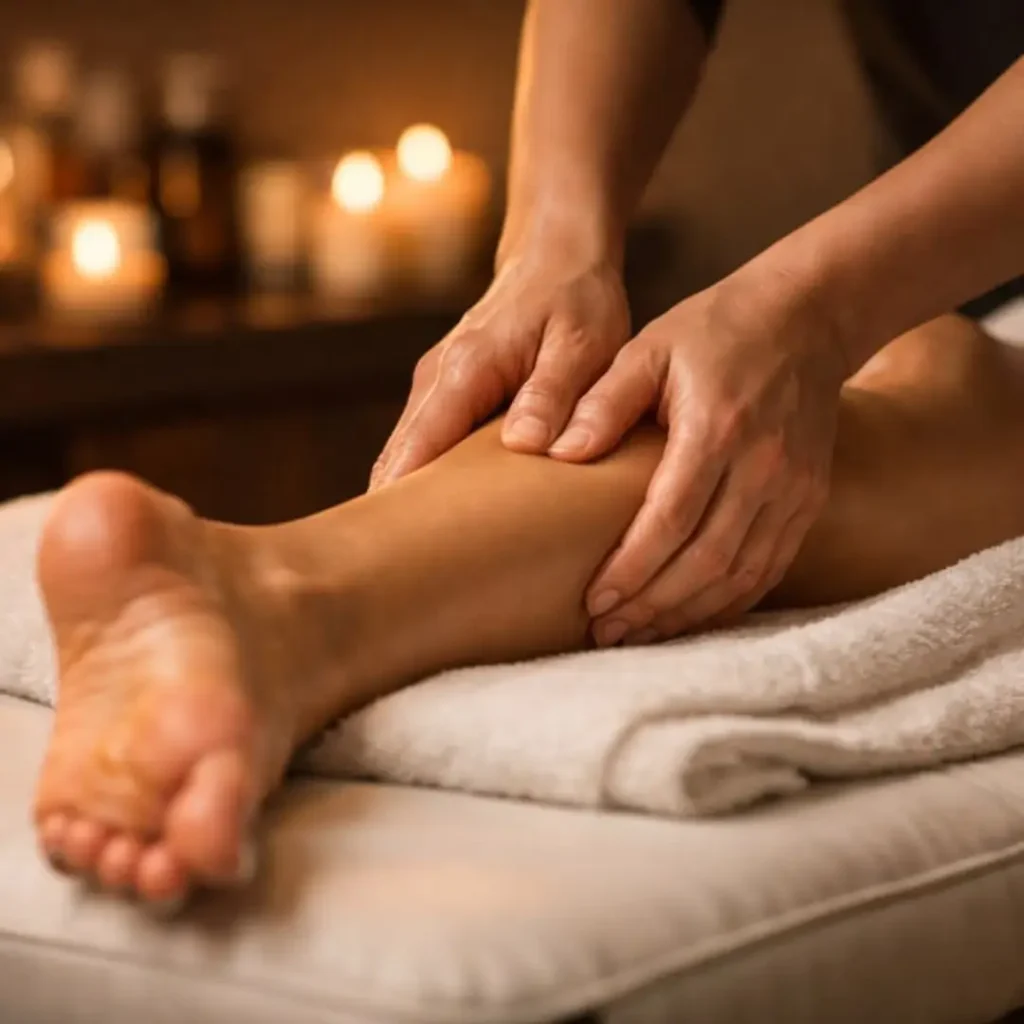
For this, you can massage the area with your hands or use simple recovery tools.
Helpful options include:
- Foam rollers
- Massage balls
- Handheld massagers
In particular, massage often feels especially good after long walks or exercise.
Even so, just a few minutes may help reduce tightness and soreness.
Elevate Your Legs
Keeping your legs elevated may help reduce swelling and pressure.
To do this, lie down and place your legs on a pillow or cushion.
As a result, this can improve circulation and ease throbbing pain.
Overall, many people find this helpful after standing all day or after workouts.
Drink More Water
Many people forget that dehydration can lead to muscle pain and cramps.
Because when your body does not have enough fluids, muscles can tighten more easily.
So, drink water slowly throughout the day.
Additionally, you can also try:
- Coconut water
- Electrolyte drinks
- Oral hydration drinks
These help replace important minerals lost through sweat.
Overall, hydration is one of the simplest ways to support healthy muscles.
Use Heat for Tight or Stiff Muscles
If your lower leg feels stiff instead of swollen, heat therapy may help more than ice.
This is because warmth helps muscles relax and improves circulation.
Easy Heat Therapy Options
- Heating pads
- Warm towels
- Hot water bottles
- Warm baths
Ideally, apply heat for around 15 minutes.
Overall, heat can feel very soothing for tight calves and sore muscles.
Wear Comfortable and Supportive Shoes
Sometimes, lower leg pain starts with your shoes.
For instance, shoes without support can place extra stress on your feet, ankles, and calves.
So, look for shoes with:
- Soft cushioning
- Good arch support
- Comfortable fit
- Shock absorption
Overall, supportive footwear can make a huge difference, especially if you stand or walk a lot.
Best Products That May Help Lower Leg Pain
Some products can make recovery easier, especially if leg pain happens often.
That said, you do not need a lot of products. Instead, just focus on what actually helps your lifestyle.
Compression Sleeves
Compression sleeves are popular for lower leg support.
Specifically, they gently improve circulation and help reduce muscle fatigue.
Benefits
- May reduce swelling
- Supports tired muscles
- Comfortable during activity
Possible Downsides
- Some people find them too tight
- Not ideal for every condition
Overall, many active people use them during walking, exercise, or long work shifts.
Foam Rollers
Foam rollers help loosen tight muscles and improve flexibility.
Typically, they are often used after workouts.
Pros
- Helps muscle recovery
- Easy to use at home
- Affordable option
Cons
- Can feel uncomfortable at first
- Needs regular use for best results
Overall, foam rolling may help reduce muscle tension over time.
Heating Pads
Heating pads are simple but very useful.
Specifically, they provide warmth that helps sore muscles relax.
Benefits
- Easy to use
- Good for home recovery
- Helps improve comfort
Cons
- Relief may be temporary
- Requires power or charging
Still, many people find them very comforting during pain flare-ups.
Massage Guns
Massage guns have become very popular for muscle recovery.
Basically, they use vibration to target tight muscles.
Benefits
- Helps improve blood flow
- Useful after exercise
- May reduce soreness
Things to Know
- Some models are expensive
- Too much pressure can cause discomfort
Overall, used correctly, they may help tired lower leg muscles feel more relaxed.
How to Prevent Lower Leg Pain
Preventing pain is always easier than treating it later.
So, small daily habits can help keep your legs healthy and strong.
Stretch Regularly
Flexible muscles are less likely to feel tight and painful.
Specifically, focus on stretching your:
- Calves
- Ankles
- Hamstrings
- Feet
Even so, just five minutes a day can help.
Avoid Overtraining
Too much exercise without enough recovery can strain your muscles.
Instead, increase workouts slowly and give your body proper rest.
After all, pain is often your body’s way of asking for recovery.
Stay Hydrated Daily
Drink enough water every day, especially if you:
- Exercise regularly
- Spend time in hot weather
- Sweat heavily
Overall, healthy muscles need proper hydration to work well.
Take Breaks if You Stand a Lot
Standing too long can put pressure on your lower legs.
So, try to:
- Sit down during breaks
- Stretch your legs
- Walk around gently
- Change positions often
As a result, this helps improve circulation and reduce muscle stress.
When Lower Leg Pain Could Be Serious
Most lower leg pain improves with simple home care.
However, sometimes pain can point to a more serious issue.
So, talk to a doctor if:
- Pain becomes severe
- Swelling gets worse
- The leg looks red or feels warm
- Walking becomes difficult
- Numbness develops
- Pain lasts several days
- You notice sudden weakness
Overall, it is always better to be safe if something feels unusual.
Natural Remedies People Often Try
Some people prefer natural ways to relax sore muscles.
For example, popular home remedies include:
- Epsom salt baths
- Warm baths before bed
- Gentle yoga
- Magnesium-rich foods
- Herbal teas
Overall, these remedies may not work for everyone, but many people find them relaxing and soothing.
Final Thoughts
Lower leg pain can feel frustrating and uncomfortable, especially when it affects your daily routine.
Fortunately, if you were looking for how to get rid of lower leg pain immediately, the good news is that many cases improve with simple care at home.
For instance, rest, stretching, ice therapy, massage, hydration, and supportive products can all help reduce discomfort quickly.
Also, if you often search for how to get rid of lower leg pain immediately, it may also help to focus on prevention. In addition, staying active, stretching regularly, wearing supportive shoes, and giving your muscles enough recovery time can make a big difference.
Most importantly, listen to your body.
Overall, small daily habits often lead to healthier and pain-free legs over time.
